

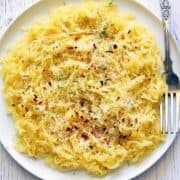
This cheesy spaghetti squash pasta made with butter, garlic, and Parmesan is incredibly flavorful. It's also surprisingly easy to make and ready in 40 minutes.
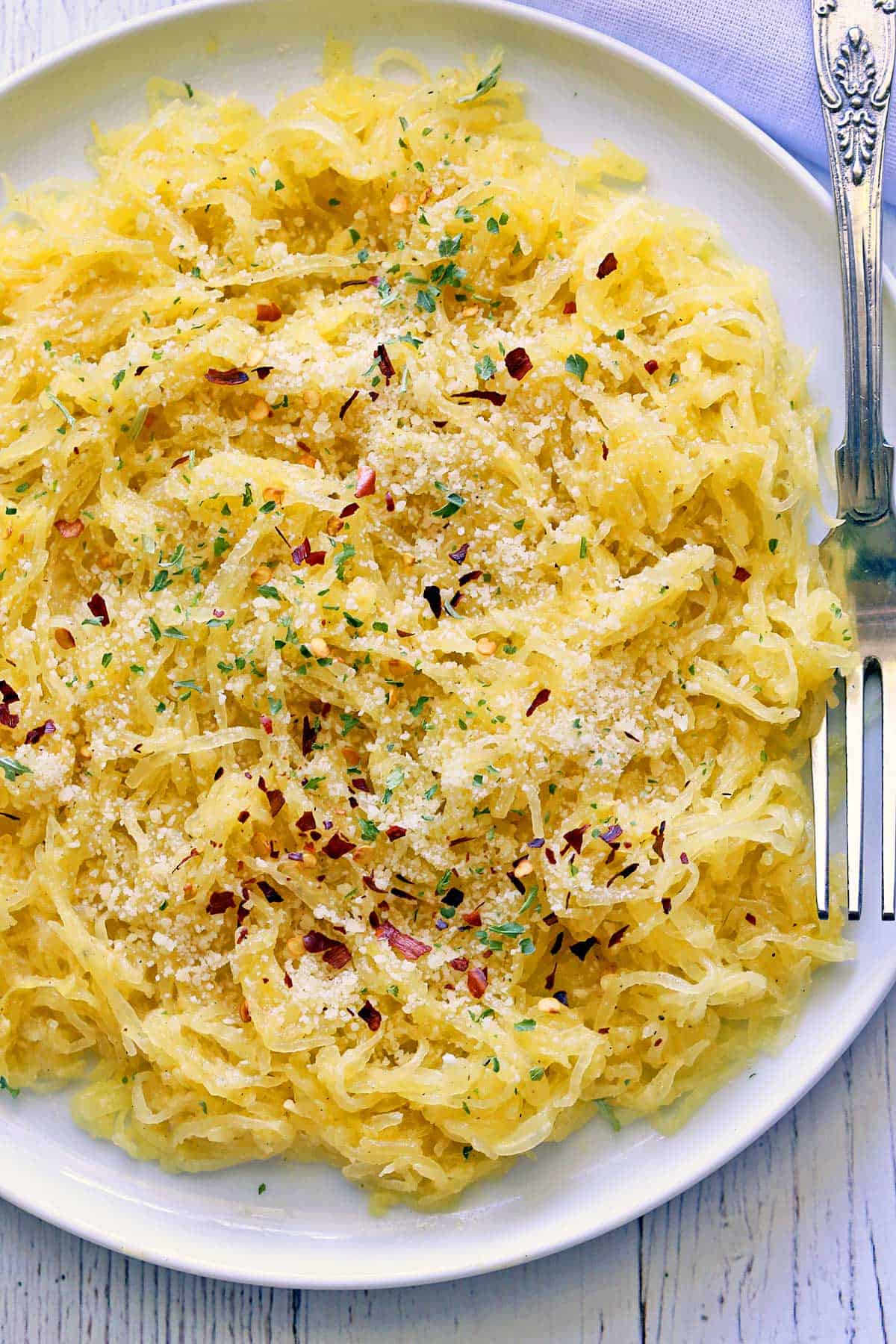
This recipe is handy whenever I crave my favorite pasta dish. It's a simple one: Spaghetti cooked al dente, then coated in a sauce of butter, garlic, and Parmesan. I don't touch the stuff anymore, but sometimes, I crave it. And when I do, I make hearts of palm pasta or this spaghetti squash pasta. It totally hits the spot, every single time.
Ingredients
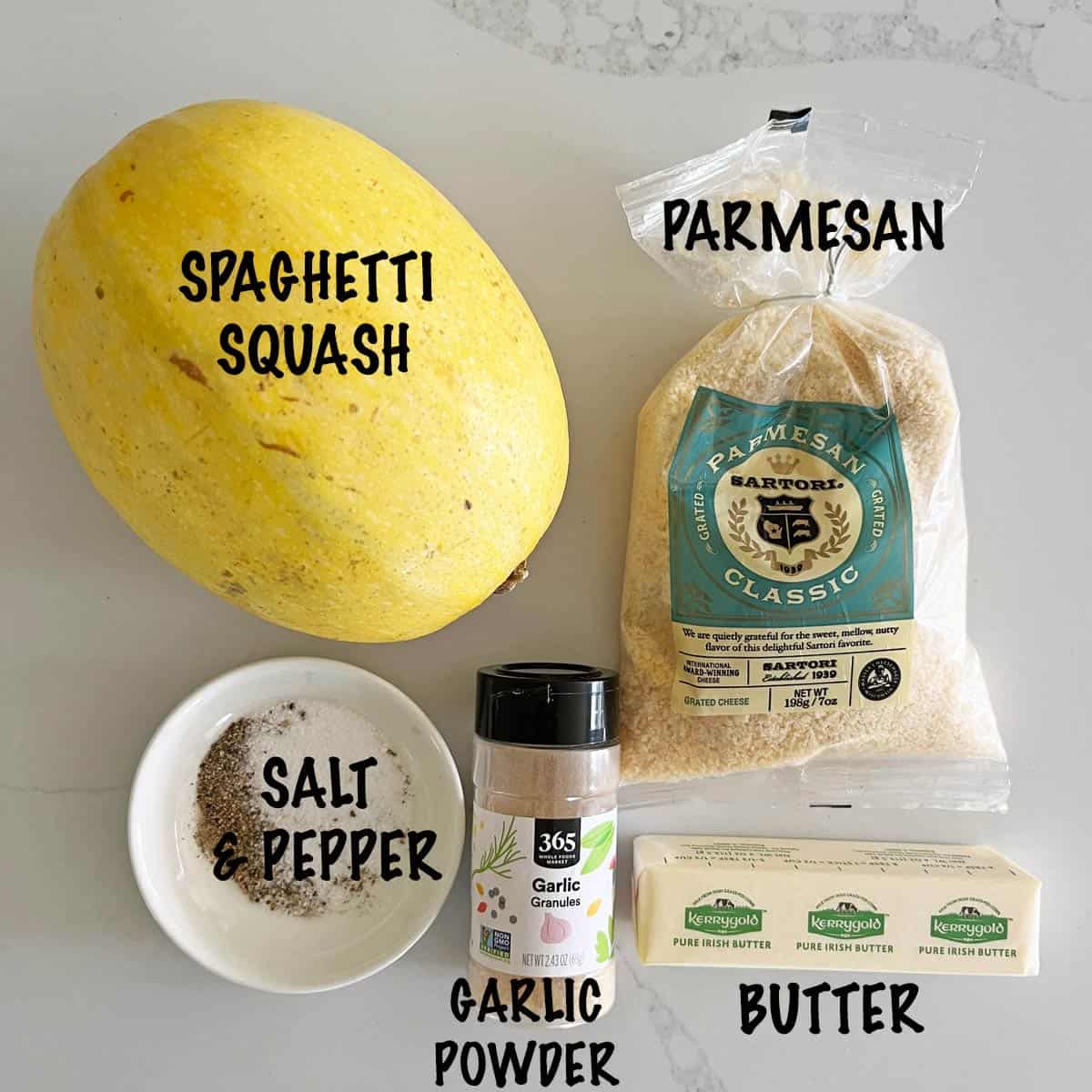
See the recipe card for exact measurements. Here are my comments on the ingredients.
- Spaghetti squash: Can be cooked in the microwave, which is the fastest and easiest method, or baked in the oven.
- Butter: I use unsalted butter.
- To season: Kosher salt, black pepper, and garlic powder.
- Grated Parmesan: It's best to use finely grated Parmesan rather than coarsely shredded.
Variations
- Sometimes, I use extra-virgin olive oil instead of butter. It's a different flavor profile, but it's very good.
- You can use minced fresh garlic instead of garlic powder. Cook it in butter or olive oil until golden, then add the remaining ingredients.
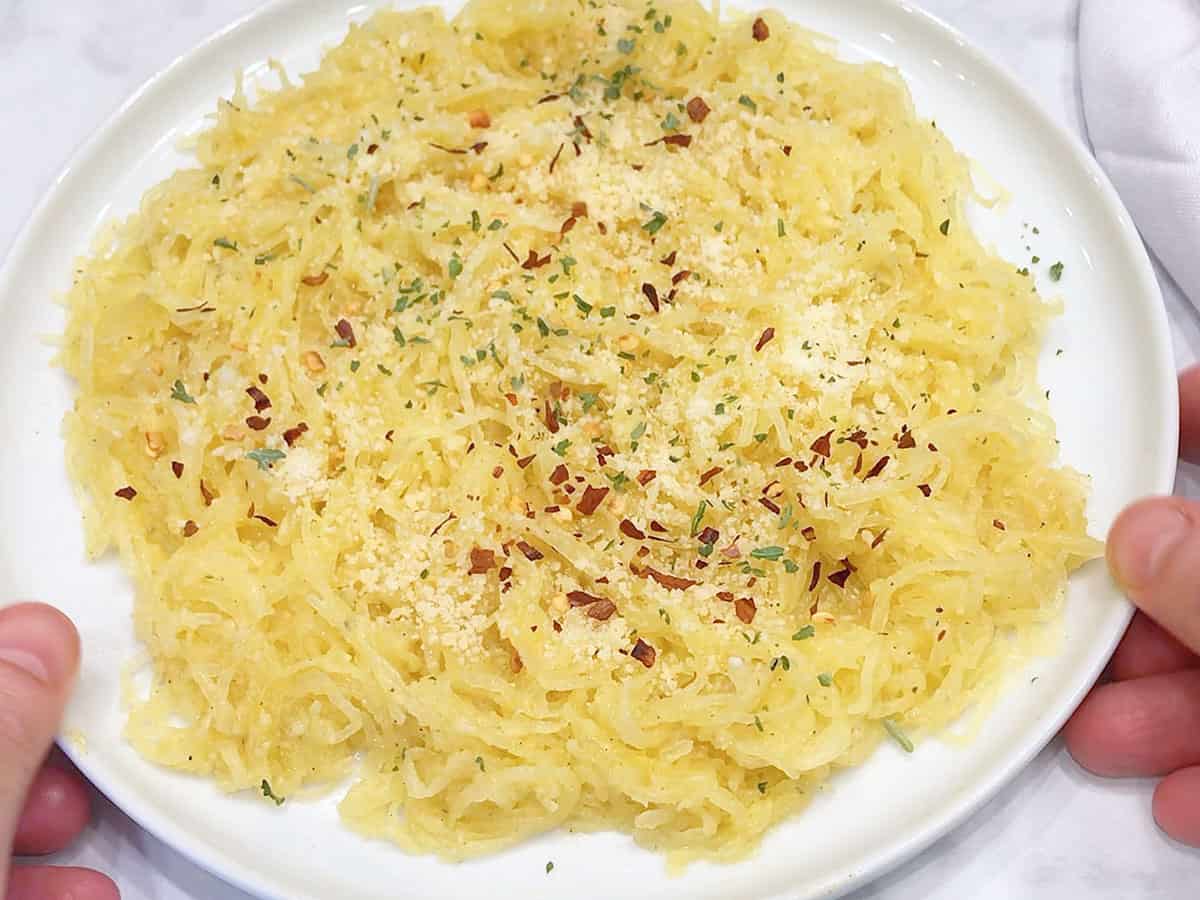
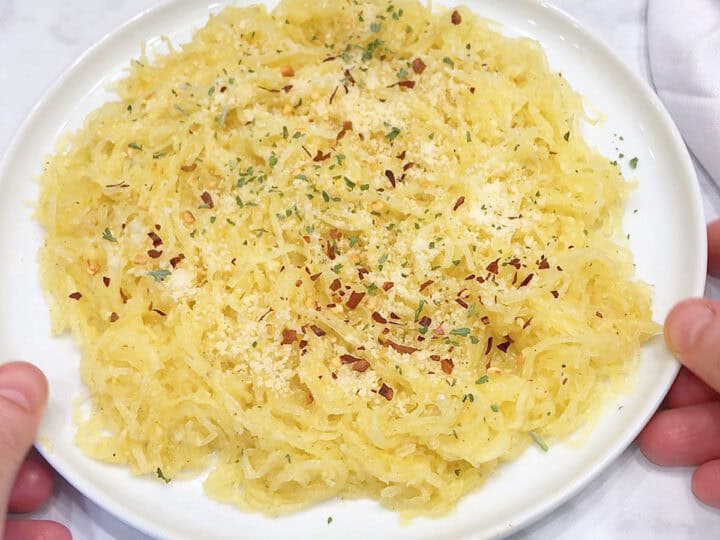
- You can garnish the finished dish with chopped parsley. When I'm out of fresh parsley, I sometimes use dried parsley and red pepper flakes, as shown in the photos on this page.
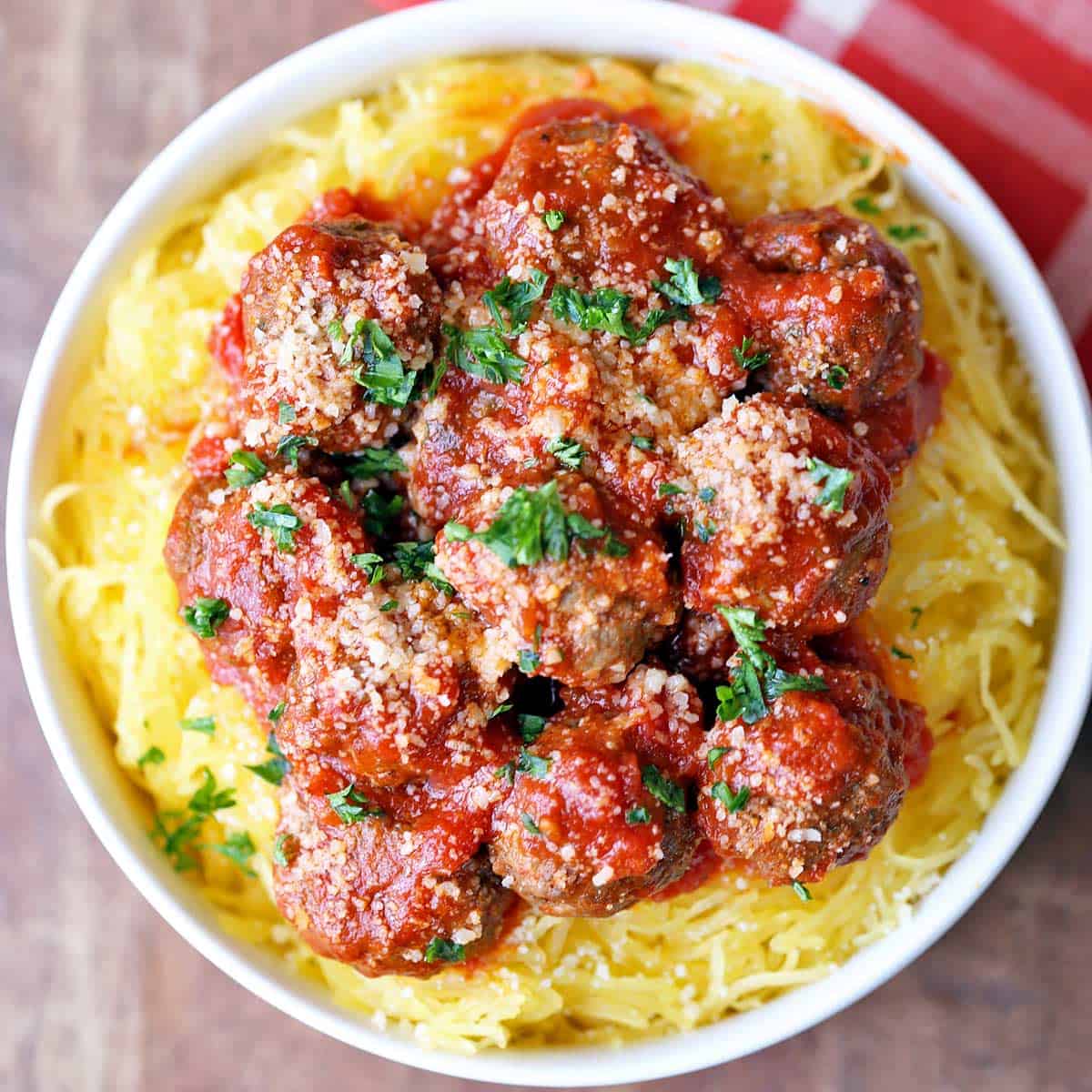
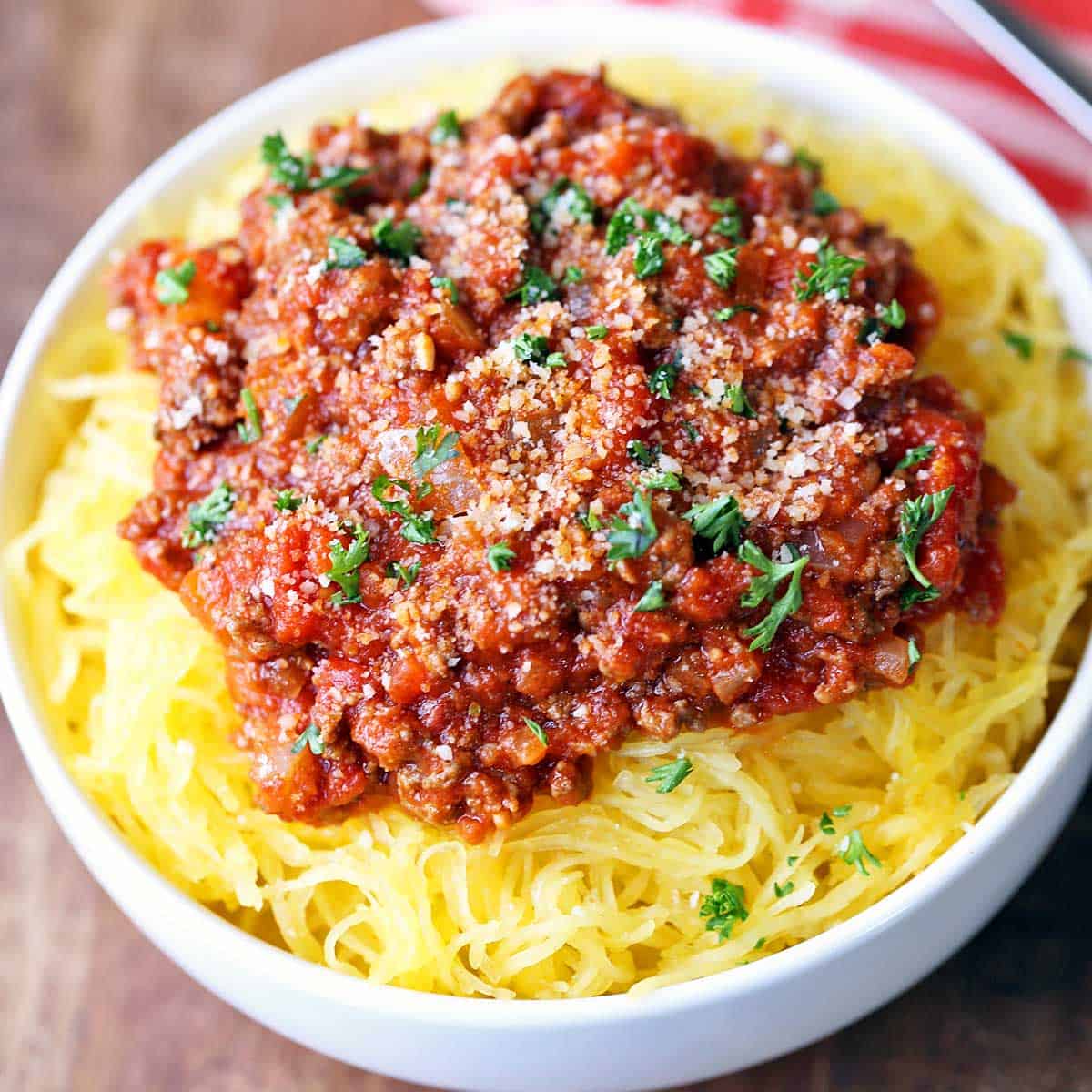
- Turn this pasta into a complete meal by adding meatballs or a meat sauce, as shown in the photos below.
Instructions
The detailed instructions and step-by-step photos are included in the recipe card. Here's a quick overview.
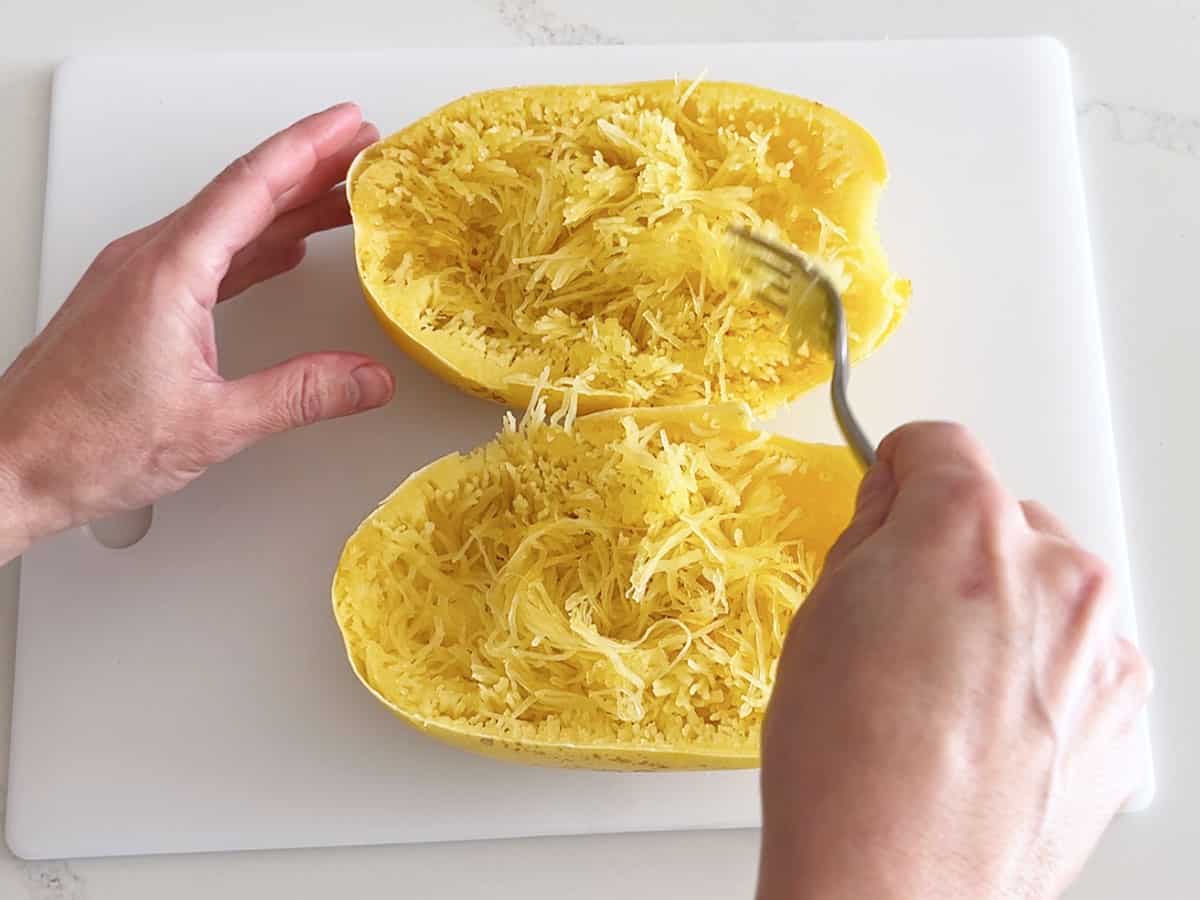
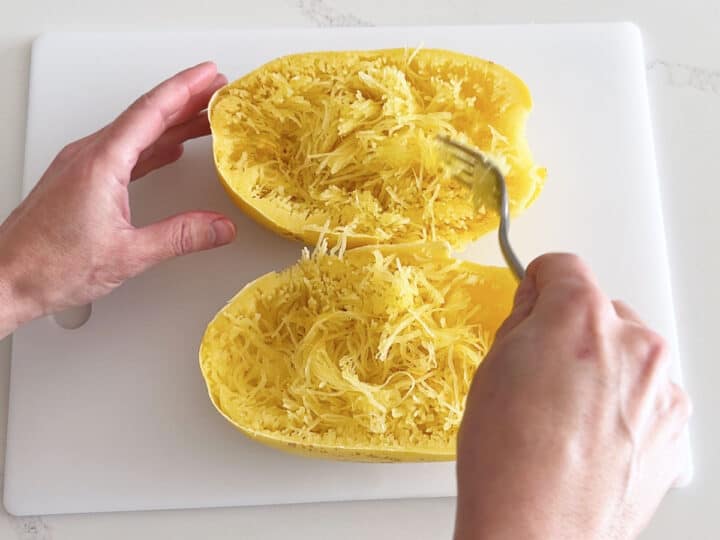
Cook the spaghetti squash in the microwave. Cut it open and remove the pulp and seeds, then rake a fork back and forth to remove its flesh in strands. As an alternative to using the microwave, you can bake the spaghetti squash.
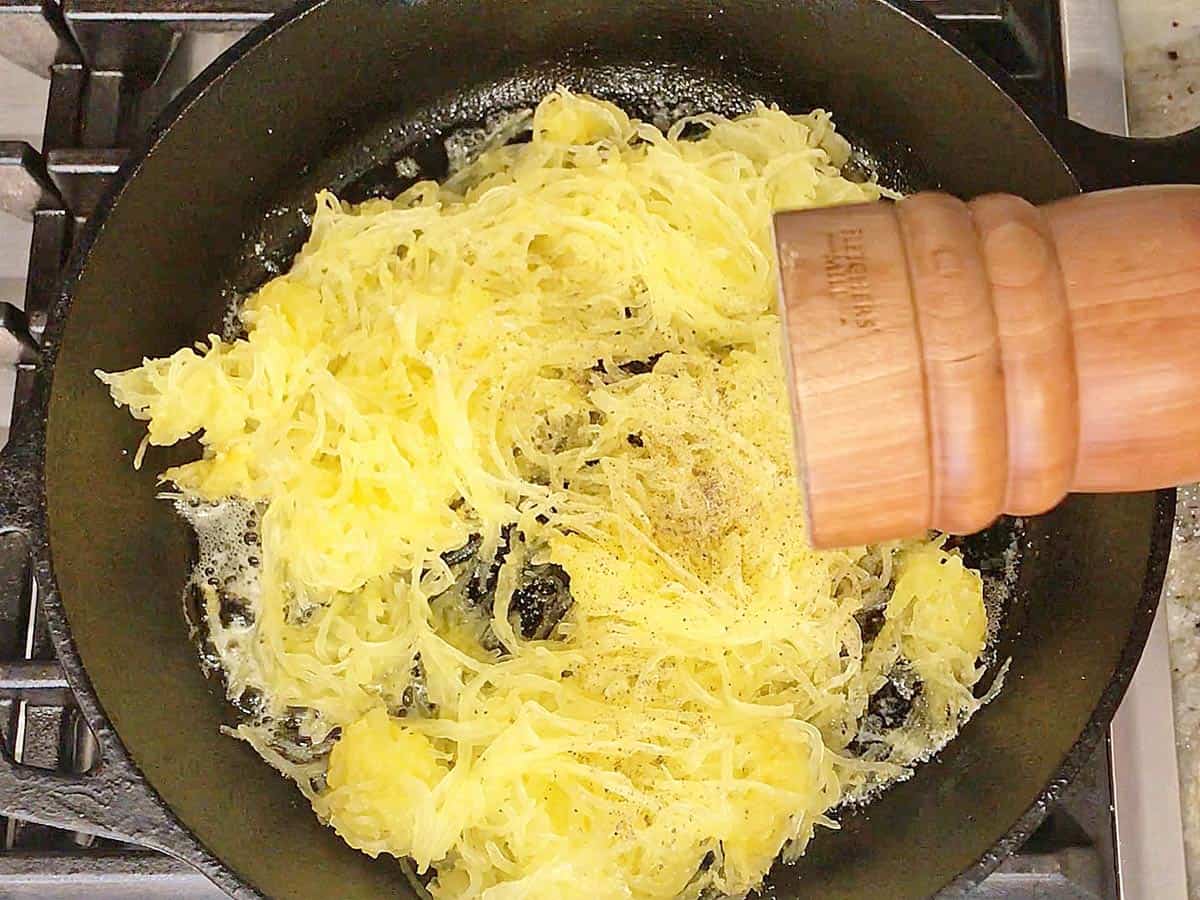
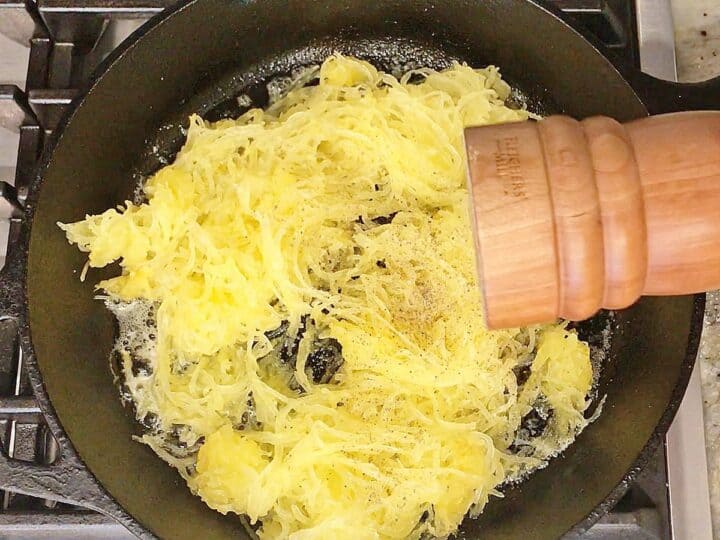
Heat the butter in a skillet, then add the squash strands and seasonings. Cook, stirring, for 1-2 minutes.
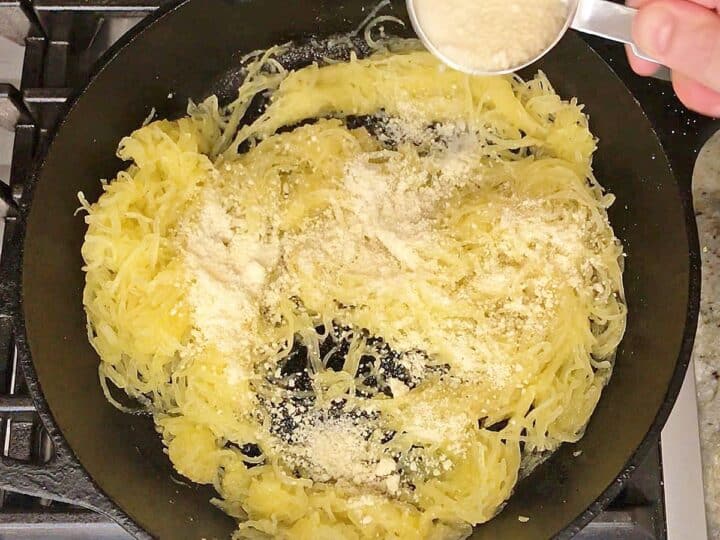
Turn the heat off, stir in the Parmesan, and serve.
I love these noodles as a wheat noodle replacement or alone in the recipe above.
Josephine
Read more comments
 I love these noodles as a wheat noodle replacement or alone in the recipe above.
Recipe Tip: Preventing Mushy Noodles
You definitely don't want to overcook the squash. While the noodles will never be truly al dente like wheat noodles, they should still have a bit of structure. If they get too soft, the strands lose their shape and can turn mushy.
So it's important to check the squash as it cooks, whether you're using the microwave or the oven. Start testing it a little earlier than you think you need to, and stop as soon as it's fork-tender (using the microwave method) or the flesh separates easily into strands but still feels firm (using the oven method).
And when you sauté the noodles with butter and seasonings, keep that step brief. You're just warming them through and coating them with flavor, not cooking them further. This helps them stay tender rather than soggy.
Recipe FAQs
It's not exactly the same as starchy pasta. But these buttery, cheesy, and garlicky noodles are delicious and ARE quite close to the experience of eating real pasta.
This usually happens when the squash was overcooked. After separating the strands, if they are soft and mushy, spread them on a clean kitchen towel for a few minutes to absorb excess moisture before sautéing.
Yes! You can cook the spaghetti squash (steps 1-4 of the recipe) up to three days ahead. Store the strands in an airtight container in the fridge, and when you're ready to use them, follow steps 5-7. While you'll need to saute the chilled strands for a bit longer to heat them through, avoid reheating for too long, as they may become too soft.
You can keep the leftovers in an airtight container in the fridge for 3-4 days. Reheat them gently in the microwave at 50% power. You can also freeze the cooled leftovers for up to three months.
Serving Suggestions
I usually serve this pasta as a side dish to any of the following main dishes:
- Baked chicken breast
- Parmesan chicken tenders
- Crispy baked chicken thighs
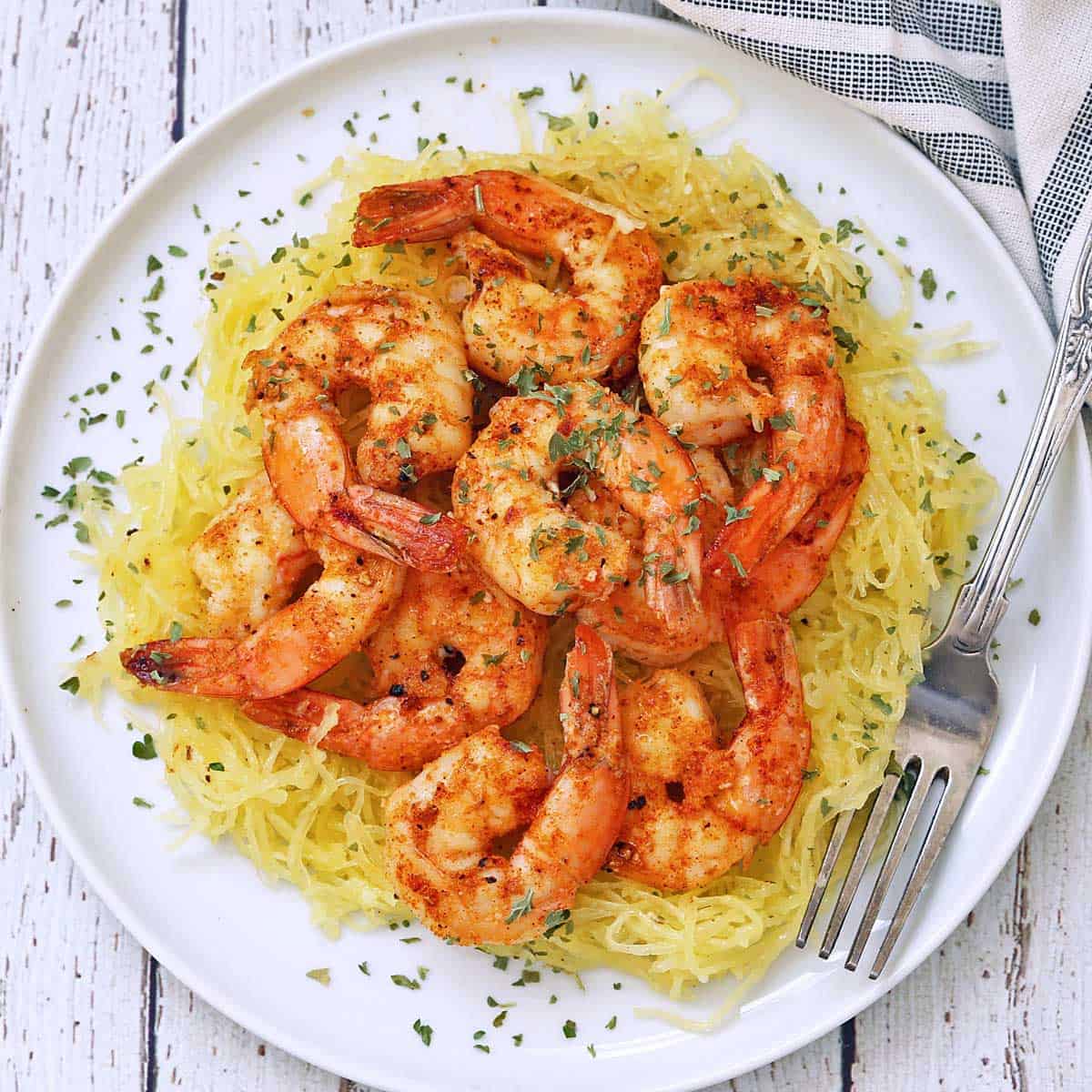
- Sauteed shrimp, as shown in the image below.
It also makes an excellent bed for saucy dishes such as shrimp in cream sauce, keto sloppy joes, pulled beef, or beef Stroganoff.
Recipe Card
Spaghetti Squash Pasta
Video
Ingredients
- 1 spaghetti squash - medium; 3 pounds
- 4 tablespoons unsalted butter
- 1 teaspoon Diamond Crystal kosher salt - or ½ teaspoon of any other salt, including Morton kosher salt
- ¼ teaspoon black pepper
- ½ teaspoon garlic powder
- ½ cup Parmesan - grated
Instructions
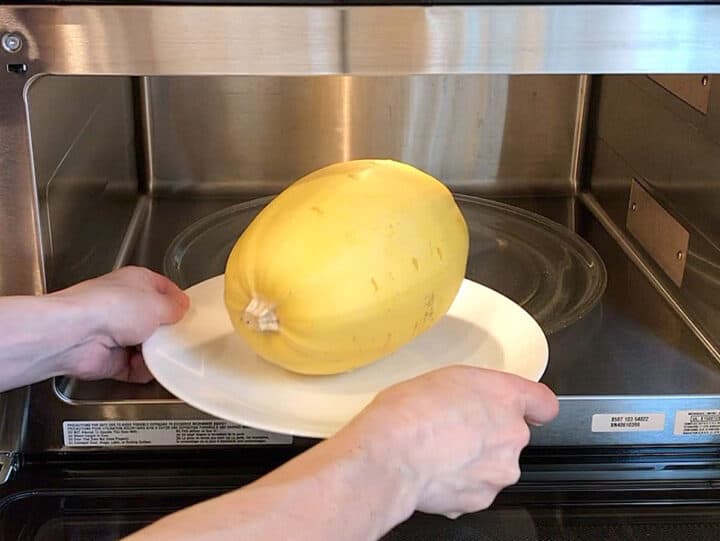
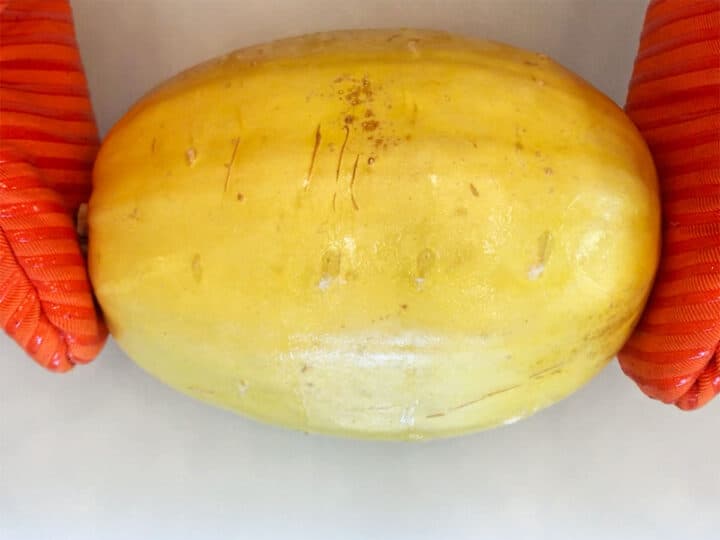
- Pierce the squash all over with a fork. Place it on a microwave-safe plate. Microwave until fork-tender, 10-15 minutes, turning halfway through cooking.1 spaghetti squash

- Transfer the cooked squash to a cutting board. Be careful - the plate and the squash will be hot. Allow it to rest until cool enough to handle, about 10 minutes.

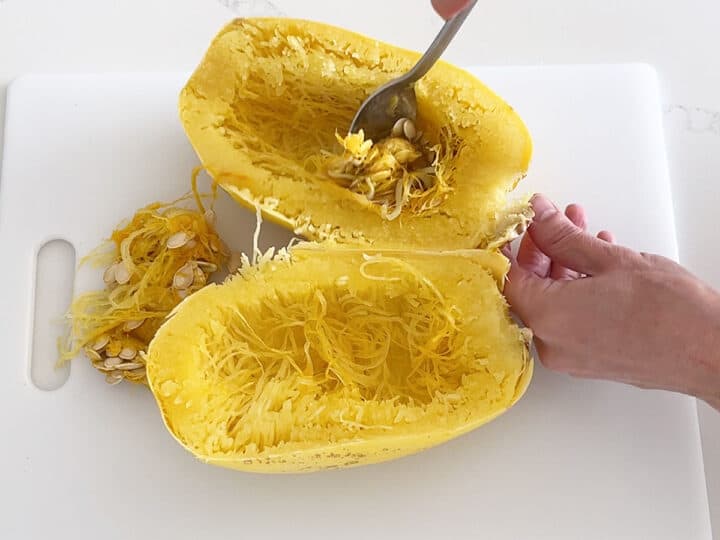
- Using a sharp chef's knife, carefully cut the squash lengthwise. Use a spoon to remove the seeds and pulp.
- Rake a fork back and forth over the squash halves to remove the flesh in strands. Place the strands in a bowl and set them aside. You should have about 4 cups of strands.
- Heat the butter in a large saucepan or skillet over medium-high heat. When the butter melts and starts to foam, add the spaghetti squash strands, kosher salt, black pepper, and garlic powder. Cook, stirring, until the noodles are well-coated, 1-2 minutes.4 tablespoons unsalted butter, 1 teaspoon Diamond Crystal kosher salt, ¼ teaspoon black pepper, ½ teaspoon garlic powder
- Turn the heat off and stir in the Parmesan cheese.½ cup Parmesan
- Divide the noodles between four plates and serve.
Notes
- Seasonings, especially salt, are guidelines. Adjust to taste.
- You definitely don't want to overcook the squash. While the noodles won't be al dente like wheat noodles, you don't want them to be overly mushy. So check the squash while you cook it (whether using the microwave or the oven) to ensure it doesn't get overcooked. And when you saute the noodles with butter and seasonings, do so briefly.
- You can keep the leftovers in an airtight container in the fridge for 3-4 days. Reheat them gently in the microwave at 50% power. You can also freeze the cooled leftovers for up to three months.
Nutrition per Serving
Save this Recipe!
We will also add you to our weekly newsletter. Unsubscribe anytime. See healthyrecipesblogs.com/privacy/ to learn how we use your email.
Disclaimers
Most recipes are low-carb and gluten-free, but some are not. Recommended products are not guaranteed to be gluten-free. Nutrition info is approximate - please verify it. The carb count excludes non-nutritive sweeteners. Please read these Terms of Use before using any of my recipes.

Josephine says
I love these noodles as a wheat noodle replacement or alone in the recipe above
Vered DeLeeuw says
I'm so glad you like this recipe, Josephine! Many thanks for taking the time to write a comment.