

This juicy salmon steak is ready in 15 minutes. It's a seemingly fancy restaurant-level dish that's quick and easy to prepare, making it ideal for a weeknight dinner.
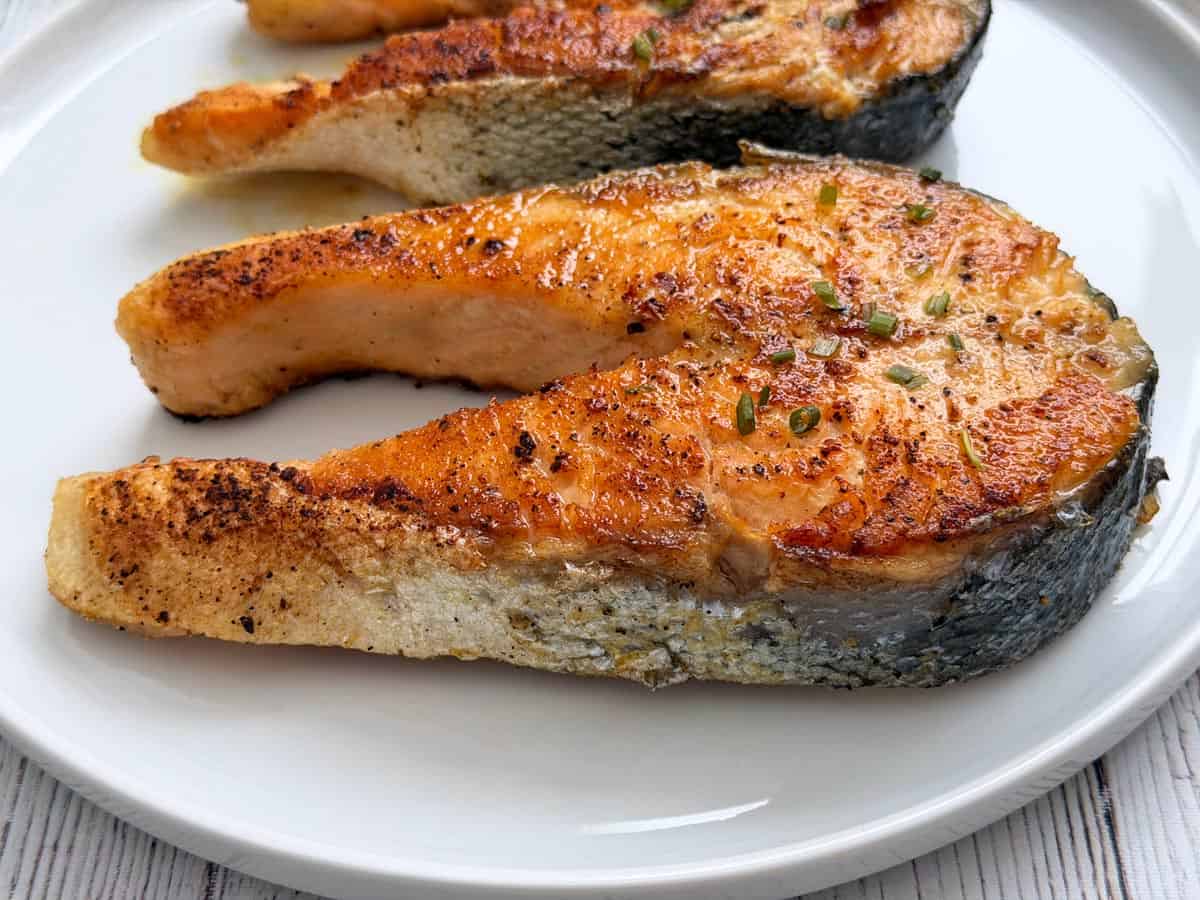
I typically use salmon fillets in recipes like baked salmon or pan-fried salmon, but when I spot a big, thick salmon steak at the grocery store, I can't resist. There's something extra satisfying about this cut! It's fatty and flavorful, and cooking it in butter and sage greatly enhances its flavor.
Ingredients
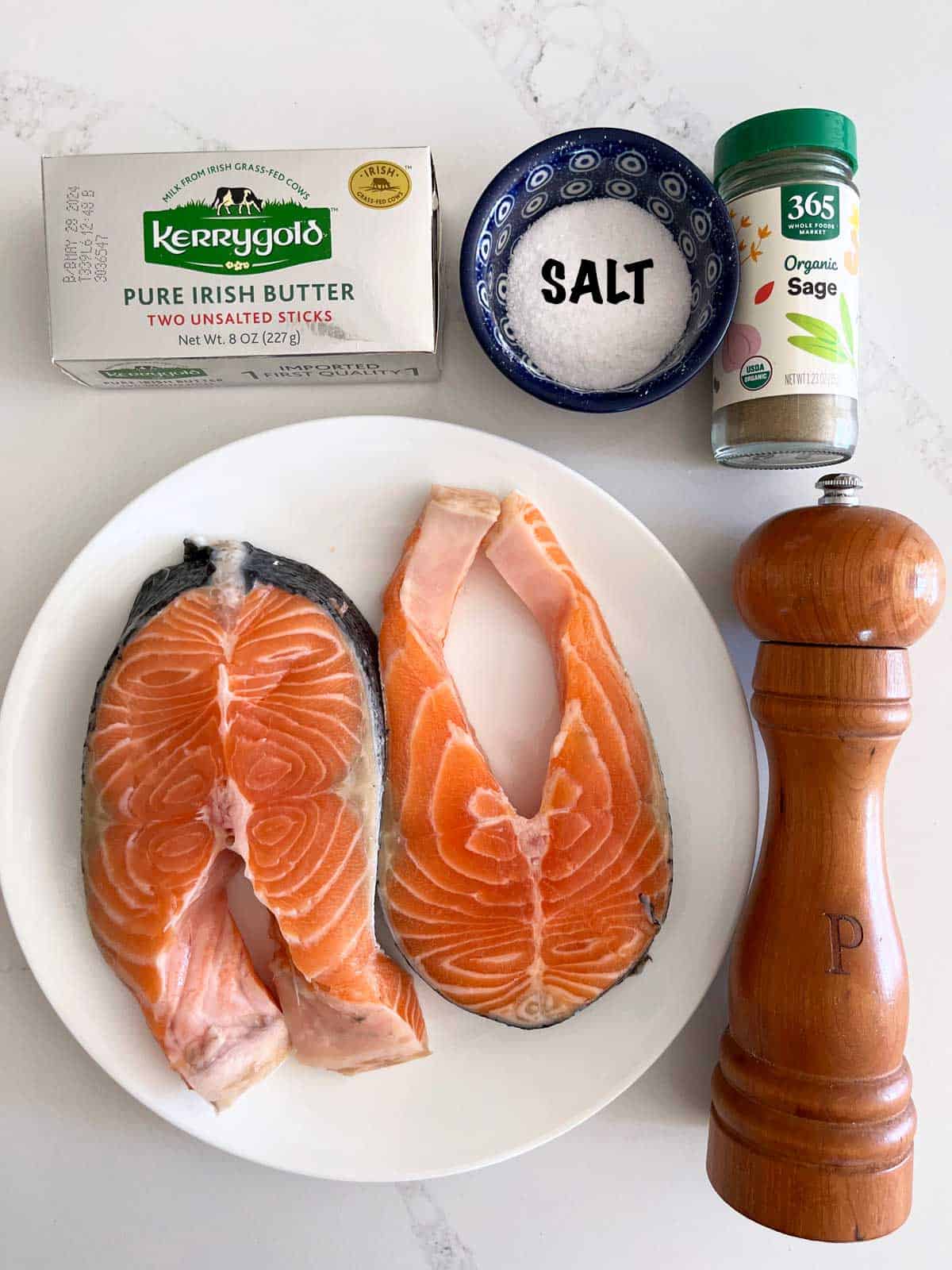
See the recipe card for exact measurements. Here are my comments on the ingredients.
- Salmon steak: I usually get these steaks at Whole Foods Market. If they are not available at your local store, try asking the fishmonger to order them.
- Seasonings: Salt, black pepper, and dried sage. Sometimes, I add half a teaspoon of garlic powder.
- Unsalted butter: For pan-frying the fish.
Instructions
The detailed instructions and step-by-step photos are included in the recipe card. Here's a quick overview.
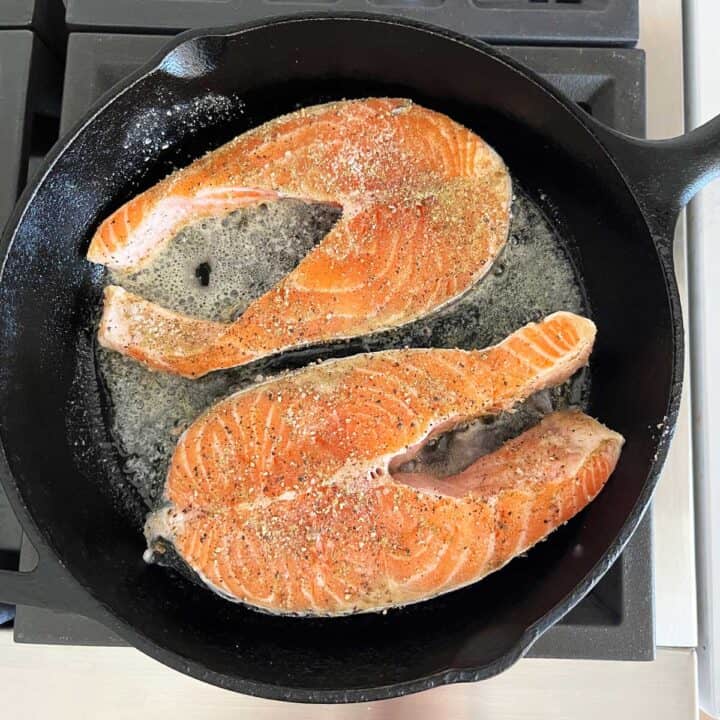
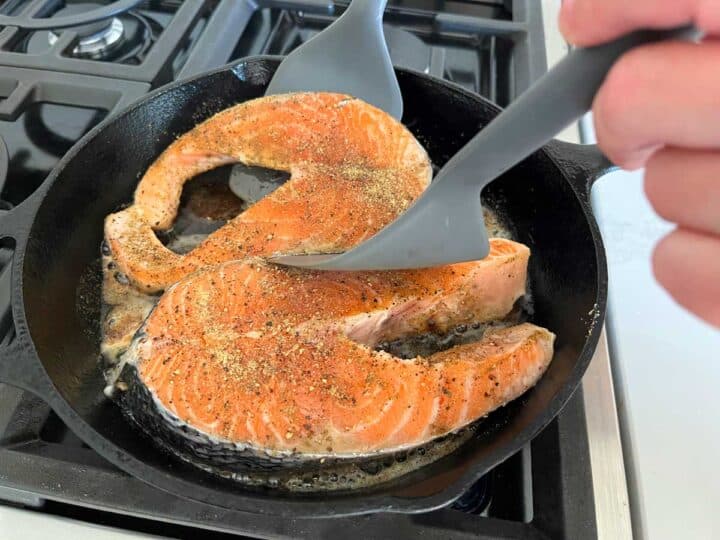
Season the salmon. Cook it in butter for three minutes on the first side. Flip using two wide spatulas, as shown in the photo below.
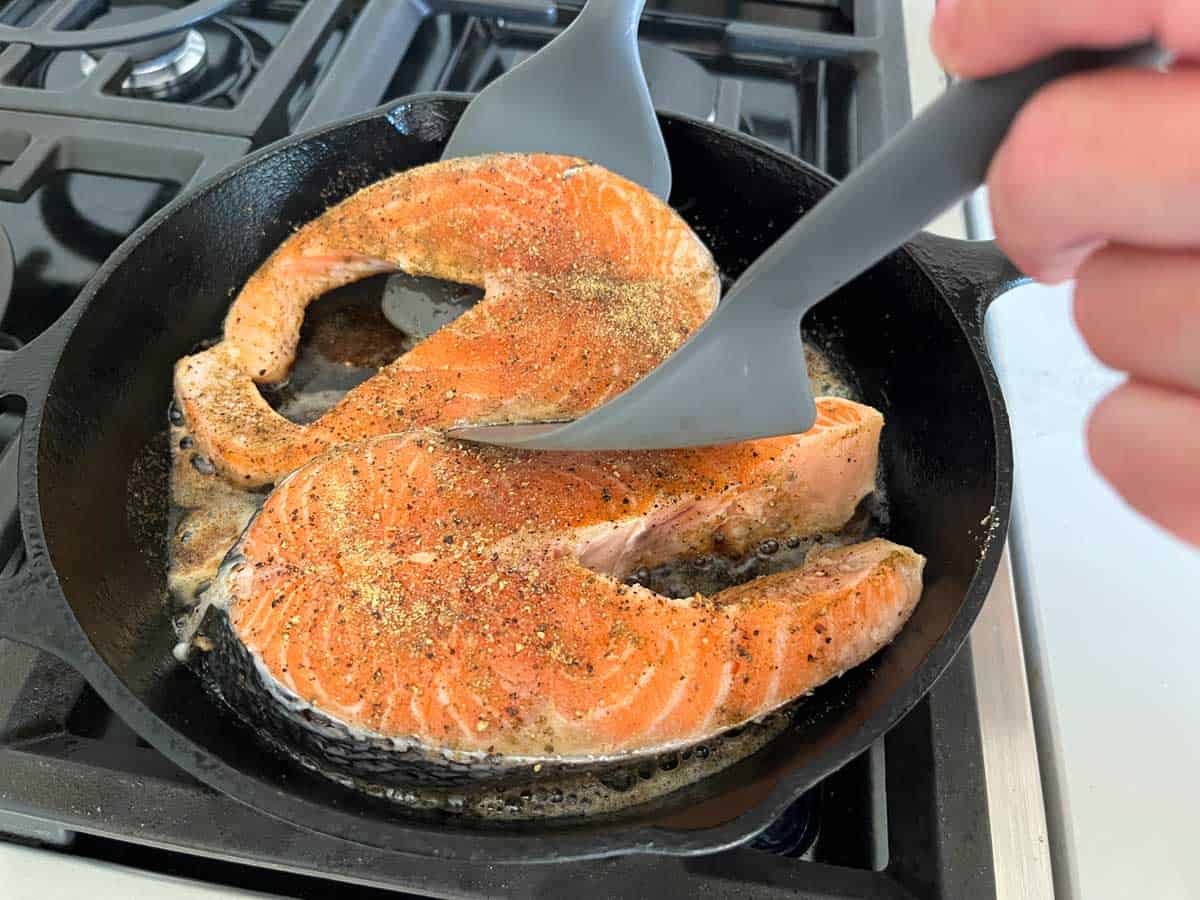
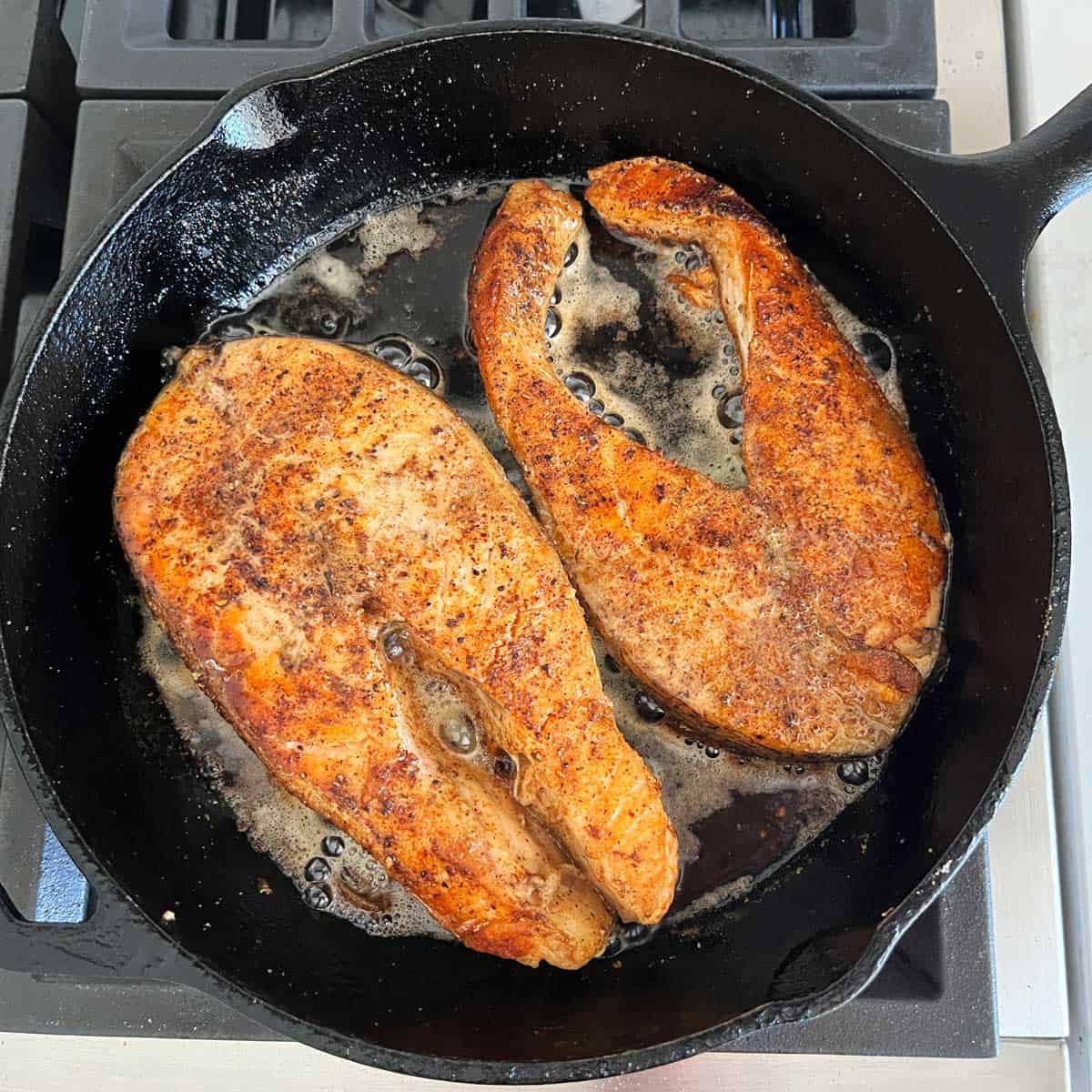
Lower the heat to medium and cook until the salmon is cooked through, for about five more minutes. Serve immediately, drizzled with the pan juices.
Recipe Tip
This recipe was written for 8-ounce, ½-inch thick steaks. If yours are much bigger, it's best to finish them in the oven to ensure they are fully cooked.
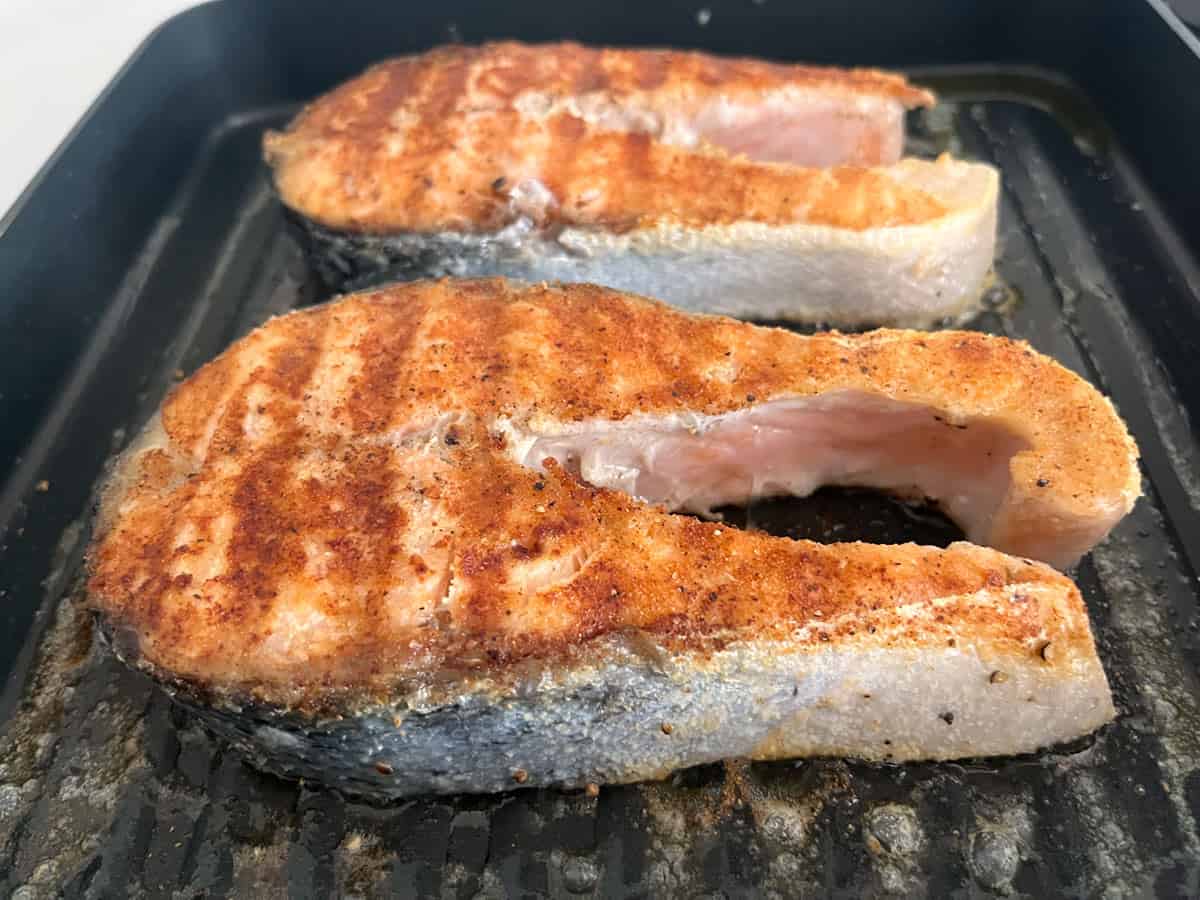
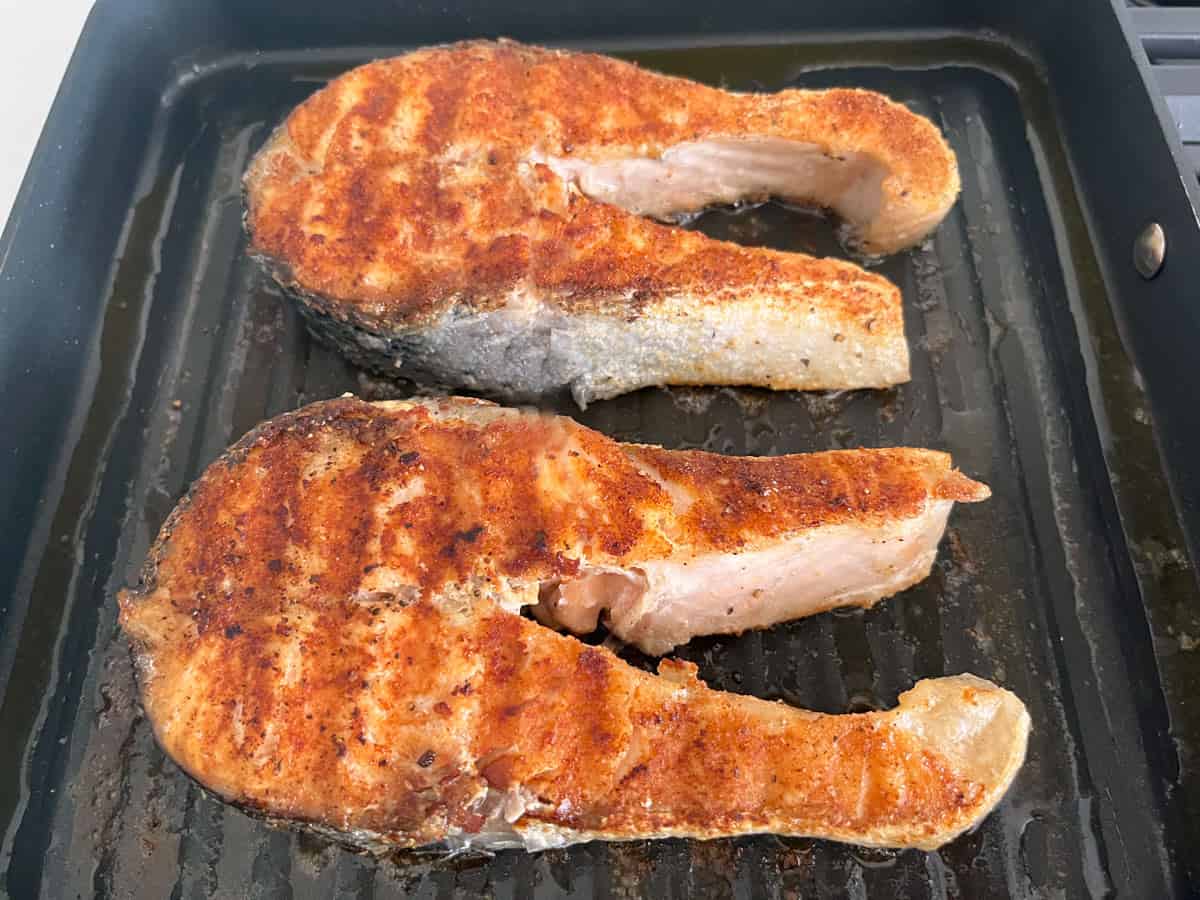
See the photos below - these steaks were huge - 12 ounces each and 1-inch thick. After browning them on both sides in a skillet (I used a grill pan), you can see in the first photo that the inside was still undercooked. I placed them in a 400°F oven for 5 minutes, and they emerged perfectly cooked, as shown in the second photo.
Recipe FAQs
Yes! For an entirely different flavor profile, I sometimes cook the salmon in olive oil instead of butter and season it with salt and pepper plus a teaspoon of smoked paprika, a teaspoon of garlic powder, and half a teaspoon of ground cumin.
Salmon is fully cooked when its color changes from translucent to opaque. Its internal temperature, measured by an instant-read thermometer inserted into the thickest part (without touching the bone), should reach 145°F.
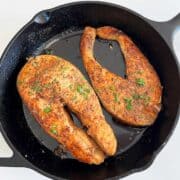
You can use a heavy-bottomed nonstick skillet, a well-seasoned cast-iron skillet, or, if you want pretty grill marks on your steaks, a nonstick grill pan, as shown below. I don't recommend cooking fish in a stainless steel pan, as they tend to stick. 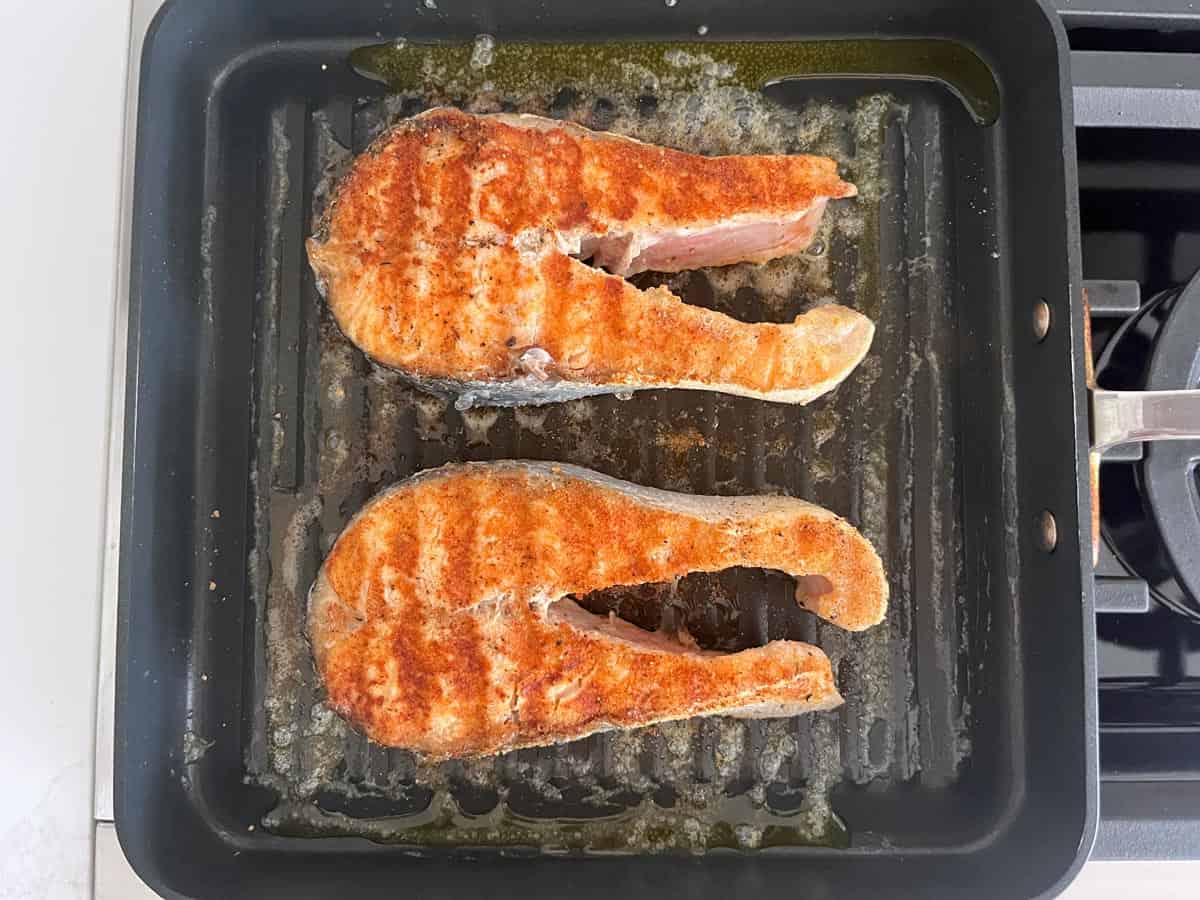
I prefer using responsibly farmed Atlantic salmon because it's fattier and juicier than most wild varieties. The extra fat keeps the fish moist and flavorful and gives it a rich, buttery texture.
Serving Suggestions
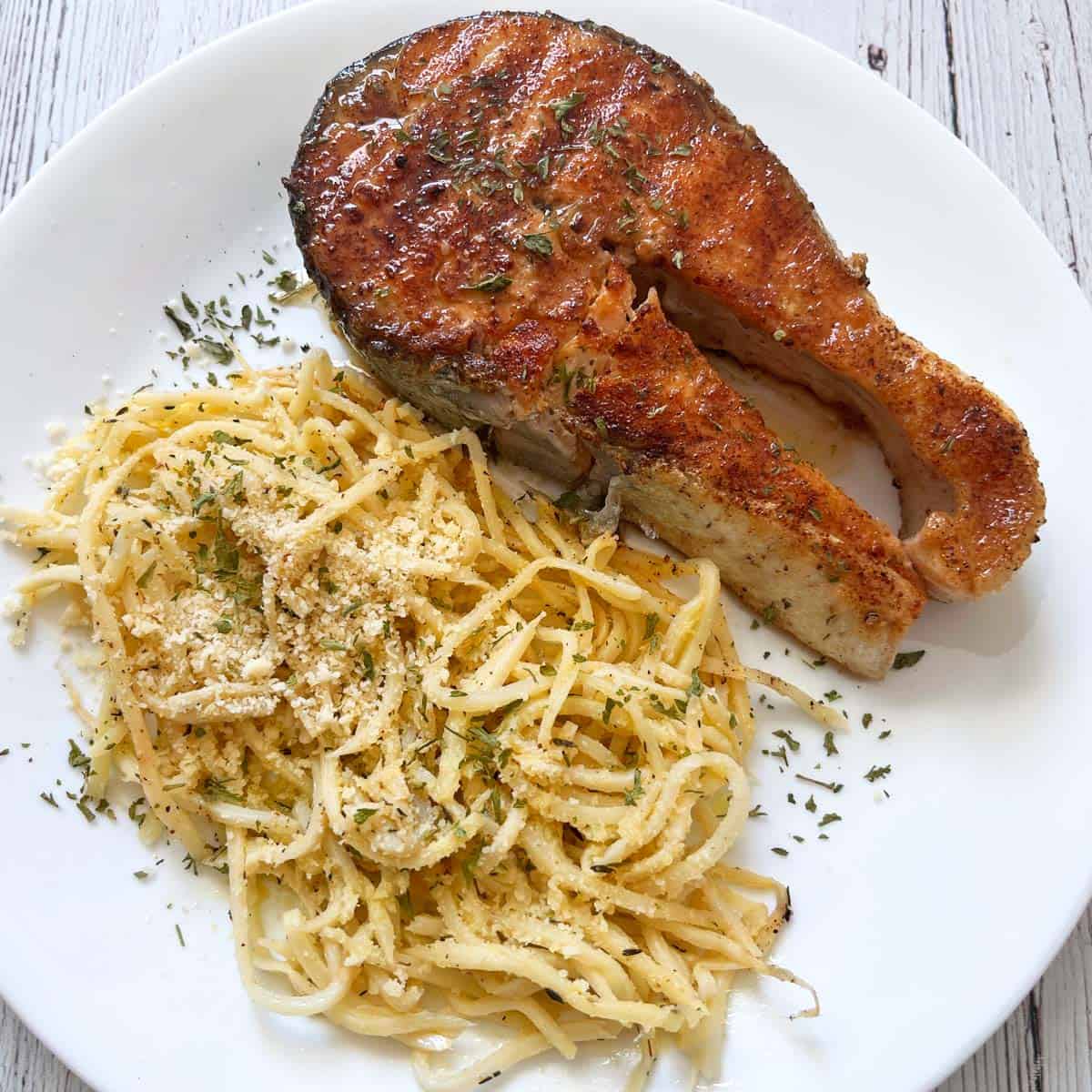
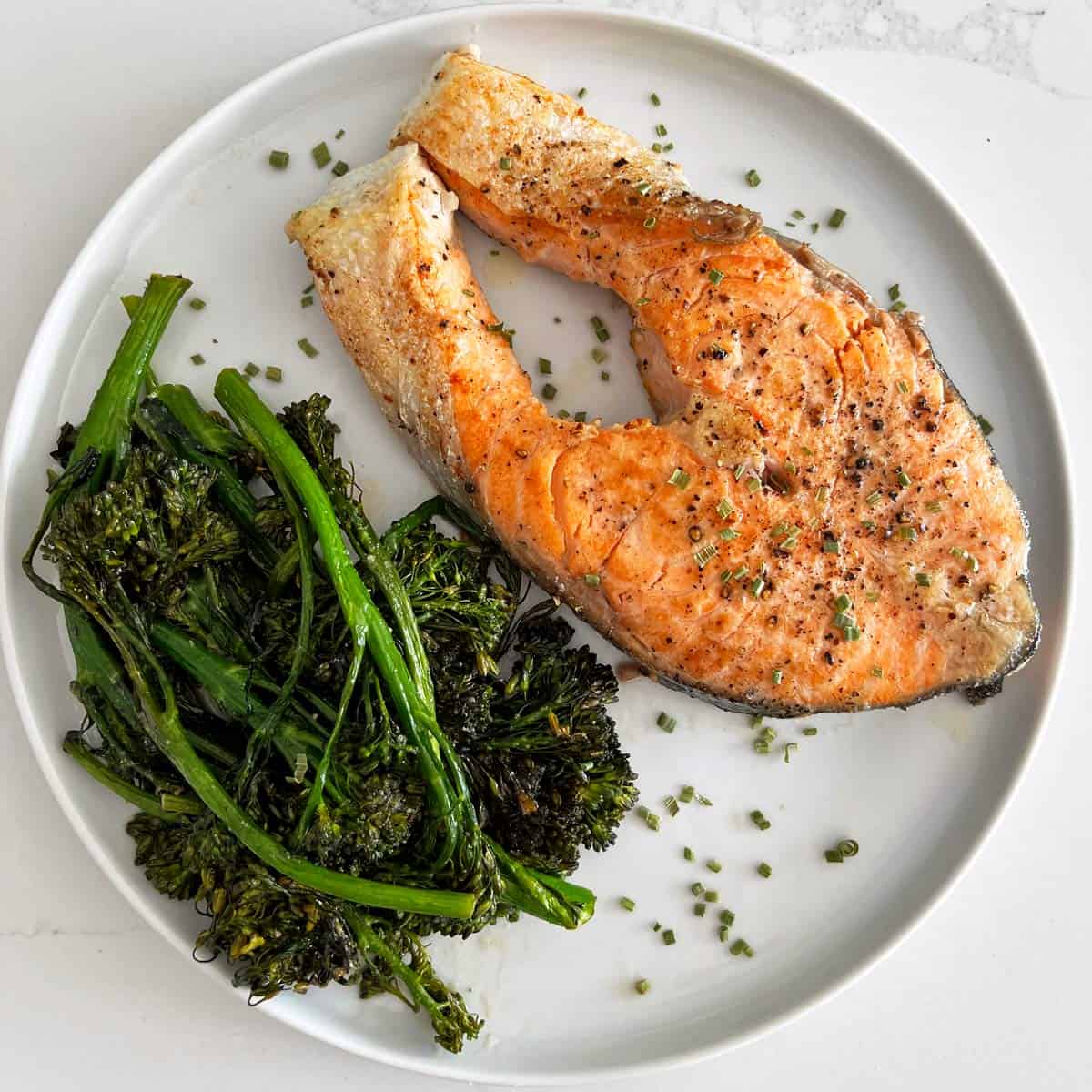
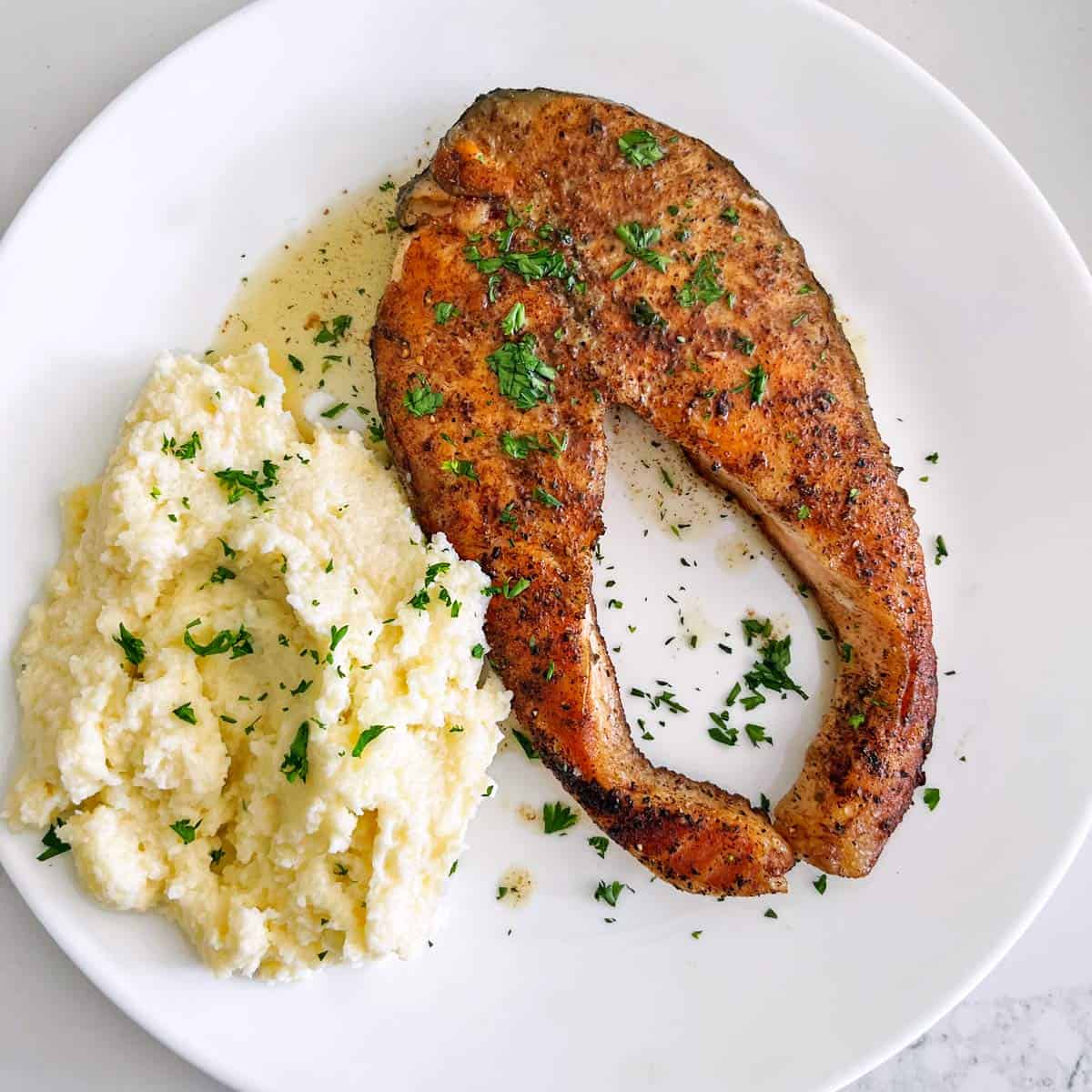
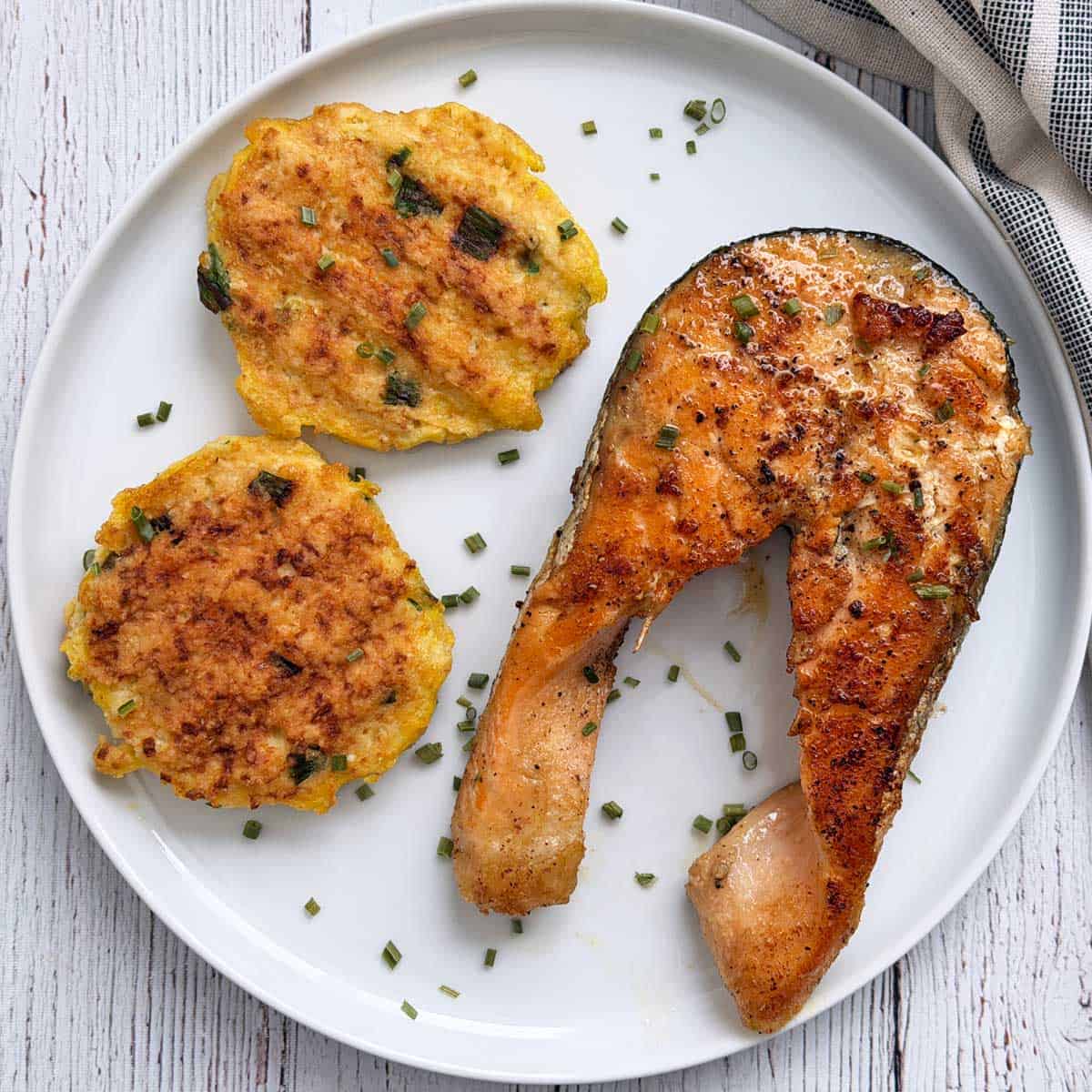
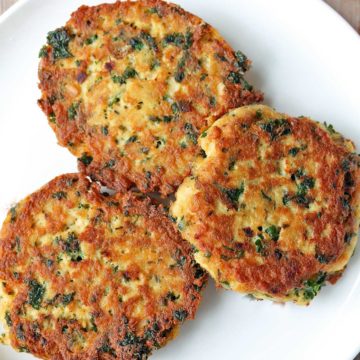
I make salmon steak often, so I was able to take quick photos of several of the side dishes I typically pair it with. In the four photos below, you can see it served with hearts of palm pasta, sauteed broccolini, mashed cauliflower, and cauliflower fritters.
Storing and Using the Leftovers
You can keep the leftovers in an airtight container like the one shown below in the fridge for up to three days.
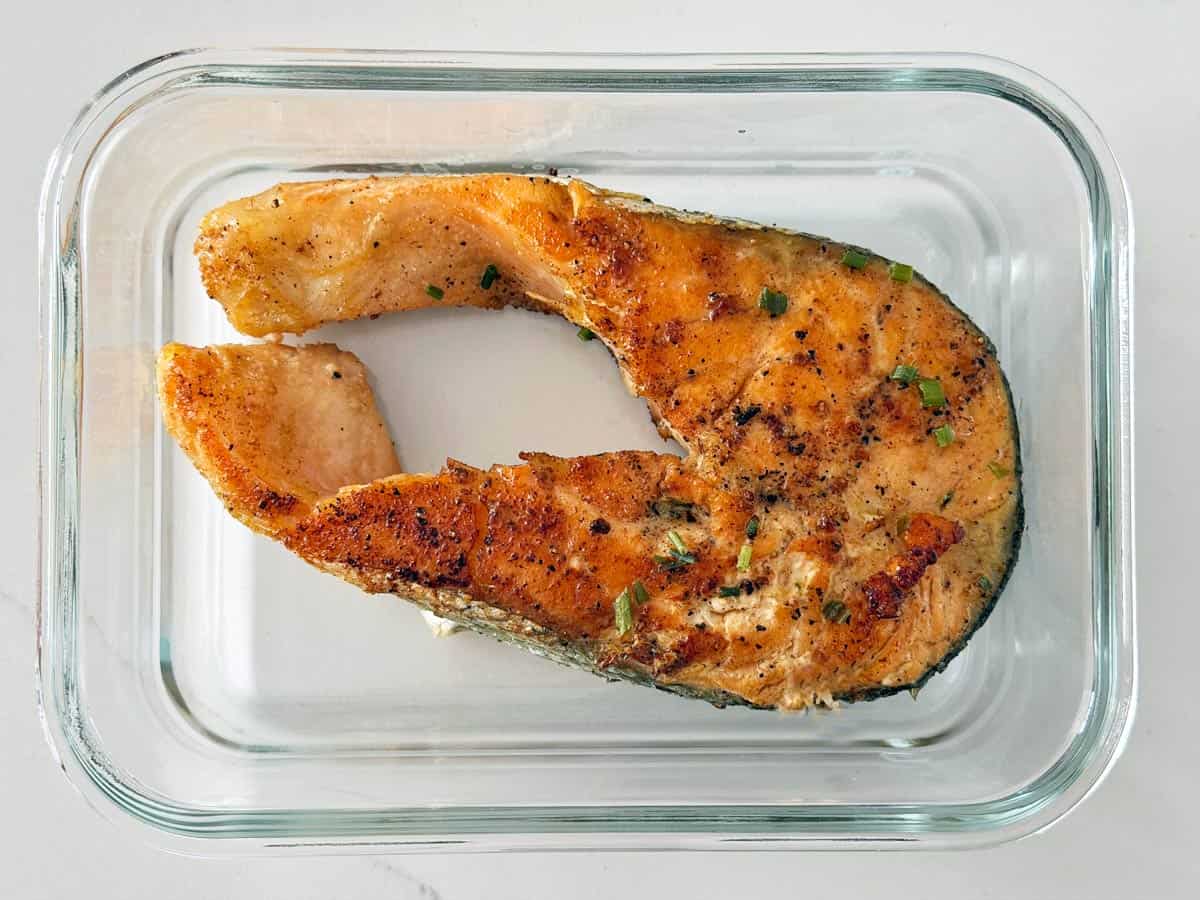
Reheat them gently to prevent them from drying out. I usually reheat them in the microwave, covered, at 50% power. You can also freeze the completely cooled leftovers in freezer bags for up to three months. Thaw them overnight in the fridge before reheating.
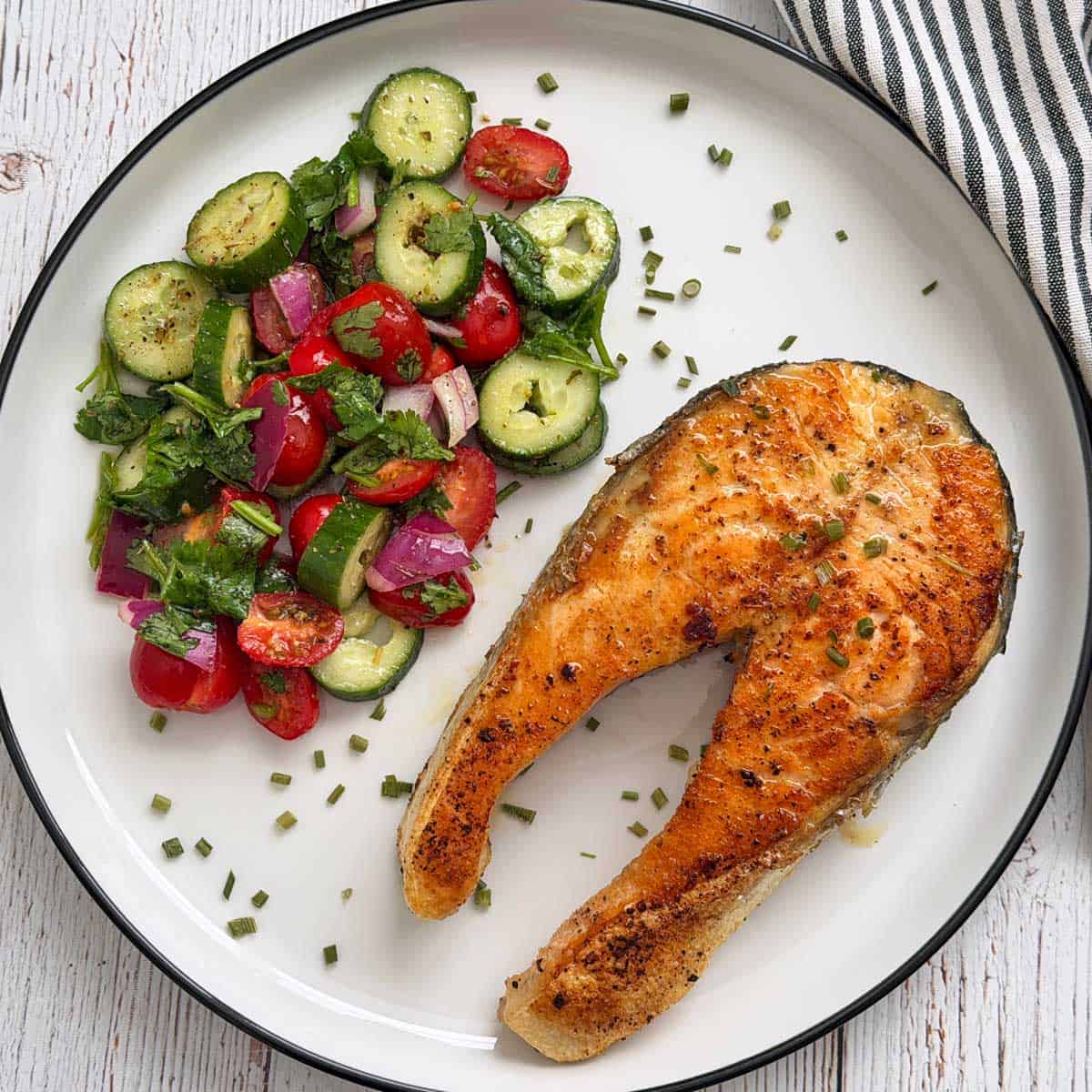
The photo below shows reheated leftovers served with cucumber tomato salad for a truly effortless weeknight meal.
Recipe Card
Pan-Fried Salmon Steak
Video
Ingredients
- 2 Atlantic salmon steaks - 8 ounces each, about ½ inch thick; see notes below
- ½ teaspoon coarse sea salt
- ¼ teaspoon black pepper
- ½ teaspoon ground sage
- 1 tablespoon unsalted butter
Instructions
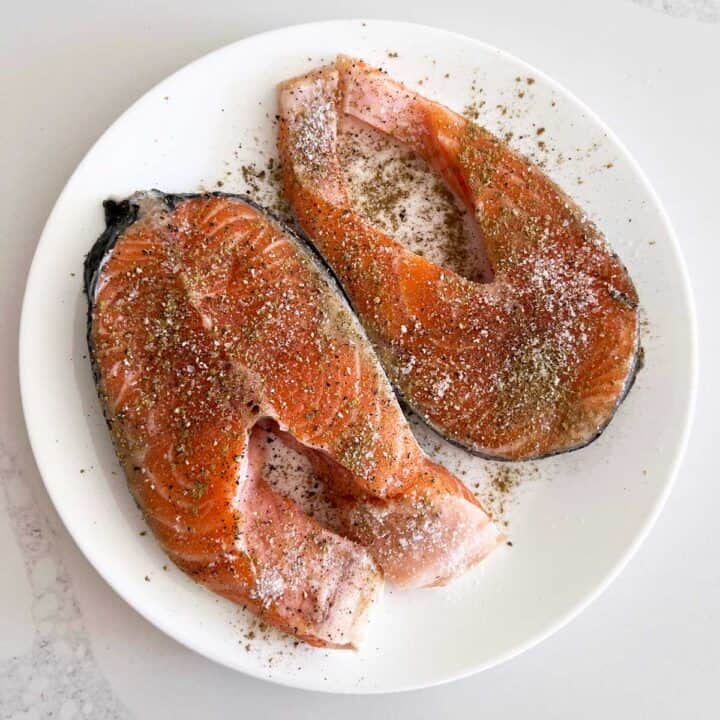
- Pat the salmon dry with paper towels. Sprinkle, then rub both sides with salt, pepper, and sage.2 Atlantic salmon steaks, ½ teaspoon coarse sea salt, ¼ teaspoon black pepper, ½ teaspoon ground sage

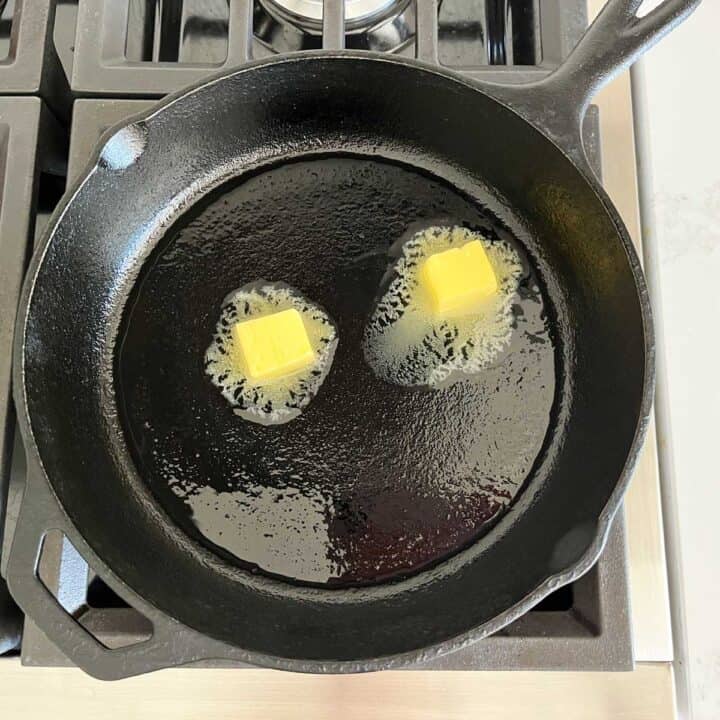
- Melt the butter in a large nonstick or cast-iron skillet over medium-high heat. Swirl to coat.1 tablespoon unsalted butter
- When the foaming subsides, add the steaks. Pan-fry them for 3 minutes on the first side.
- Turn to the other side, lower the heat to medium, and cook until the salmon is cooked through, for 3-5 more minutes. See notes below about timing.

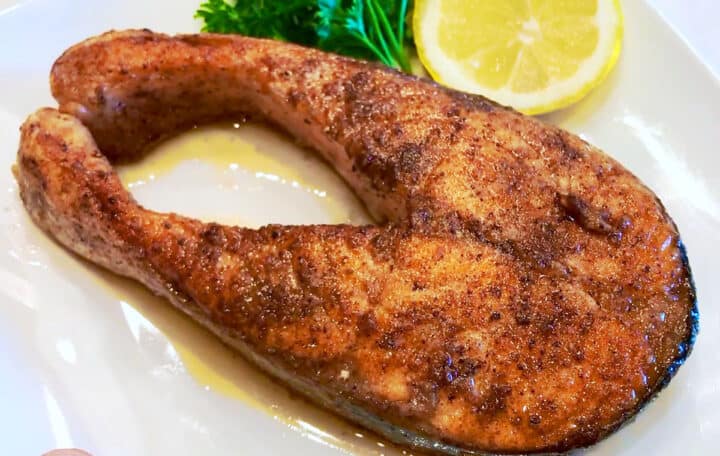
- Transfer the salmon to plates, spoon the pan juices on top, and serve.

Notes
- Seasonings, especially salt, are guidelines. Adjust to taste.
- This recipe was written for 8-ounce, ½-inch thick steaks. If yours are much bigger and thicker, it's best to finish them in the oven to ensure they are fully cooked. When cooking 12-ounce, 1-inch-thick steaks, I pan-fry them as usual, but then transfer them to a preheated 400°F oven for 5 minutes to finish cooking. Make sure your skillet is oven-safe up to at least 400°F if you use this method.
- As with all recipes, there's no escaping the need to adjust the recipe to what's happening in your kitchen. Cooking time will vary based on the weight and thickness of the steaks, how cold they are, the skillet you use, your stove (electric stoves are hotter), the size of the burners, and even the ambient temperature and humidity.
- Salmon is fully cooked when its color changes from translucent to opaque. Its internal temperature, measured by an instant-read thermometer inserted into the thickest part (without touching the bone), should reach 145°F.
- I prefer using responsibly farmed Atlantic salmon because it's naturally fattier and juicier than most wild varieties. That extra fat keeps the fish moist and flavorful, so it's much harder to overcook. It also gives the salmon a rich, buttery texture.
- You can keep the leftovers in an airtight container in the fridge for up to three days. Reheat them gently to prevent them from drying out. I usually reheat them in the microwave, covered, at 50% power. You can also freeze the completely cooled leftovers in freezer bags for up to three months. Thaw them overnight in the fridge before reheating.
Nutrition per Serving
Save this Recipe!
We will also add you to our weekly newsletter. Unsubscribe anytime. See healthyrecipesblogs.com/privacy/ to learn how we use your email.
Disclaimers
Most recipes are low-carb and gluten-free, but some are not. Recommended products are not guaranteed to be gluten-free. Nutrition info is approximate - please verify it. The carb count excludes non-nutritive sweeteners. Please read these Terms of Use before using any of my recipes.

Stephen Frewer says
I can’t cook.
But I can now.
Great recipe.
I am a kitchen god!
Vered DeLeeuw says
Haha glad this was a success, Stephen!
Felisse says
Loved this simple recipe for salmon steaks! I covered mine with a lid while cooking and it was moist and not overcooked. I served it over salad with goat cheese and vinaigrette dressing.
Vered DeLeeuw says
Your meal sounds amazing, Felisse! I'm so glad you enjoyed this recipe. Thank you very much for the review.
Jperalta says
My family rated this recipe excellent. I purchased fresh salmon from the co op and asked my family to find a recipe, Yours! Very juicy, nice oils, everyone ate twice. Like I said- excellent and thank you
Vered DeLeeuw says
Yay! I'm so glad everyone enjoyed this recipe, Jperalta!
Sam says
This is a good recipe and I used it a few times so far, but I don't like sage, so I don't use it.
Vered DeLeeuw says
I'm glad you like this recipe, Sam! It's fine to omit the sage.