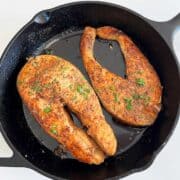
Pan-Fried Salmon Steak
This salmon steak is ready in 15 minutes. Seasoned with sage and cooked in butter, it's a delicacy.
Servings 2 servings
Calories 461kcal
Ingredients
- 2 Atlantic salmon steaks 8 ounces each, about ½ inch thick; see notes below
- ½ teaspoon coarse sea salt
- ¼ teaspoon black pepper
- ½ teaspoon ground sage
- 1 tablespoon unsalted butter
Instructions
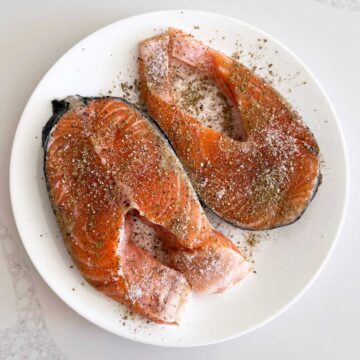
- Pat the salmon steaks dry with paper towels. Sprinkle, then rub both sides with salt, pepper, and sage.2 Atlantic salmon steaks, ½ teaspoon coarse sea salt, ¼ teaspoon black pepper, ½ teaspoon ground sage
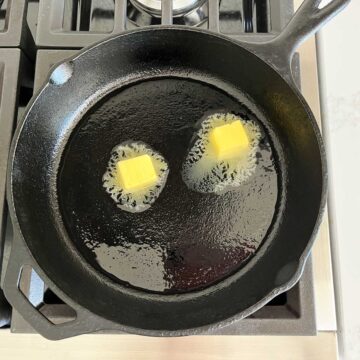
- Melt the butter in a large nonstick or cast-iron skillet over medium-high heat. Swirl to coat.1 tablespoon unsalted butter
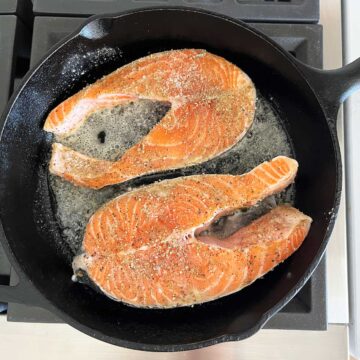
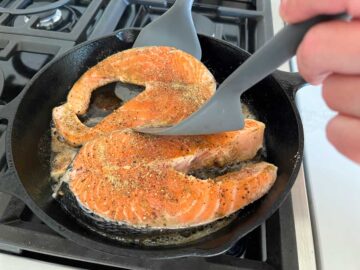
- When the foaming subsides, add the salmon steaks. Pan-fry them for 3 minutes on the first side.
- Turn to the other side, lower the heat to medium, and cook until the salmon is cooked through, for 3-5 more minutes. See notes below about timing.
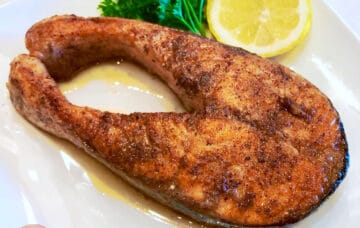
- Transfer the salmon to plates, spoon the pan juices on top, and serve.
Video
Notes
- This recipe was written for 8-ounce, ½-inch thick steaks. If yours are much bigger and thicker, it's best to finish them in the oven to ensure they are fully cooked. When cooking 12-ounce, 1-inch-thick steaks, I pan-fry them as usual, but then transfer them to a preheated 400°F oven for 5 minutes to finish cooking. Make sure your skillet is oven-safe up to at least 400°F if you use this method.
- As with all recipes, there's no escaping the need to adjust the recipe to what's happening in your kitchen. The cook time will vary according to the weight and thickness of the steaks, how cold they are, the skillet you use, your stove (electric stoves are hotter), the size of the burners, and even the ambient temperature and humidity.
- Salmon is fully cooked when its color changes from translucent to opaque. Its internal temperature, measured by an instant-read thermometer inserted into the thickest part (without touching the bone), should reach 145°F.
- I prefer using responsibly farmed Atlantic salmon because it's naturally fattier and juicier than most wild varieties. That extra fat keeps the fish moist and flavorful, so it's much harder to overcook. It also gives the salmon a rich, buttery texture.
- Seasonings, especially salt, are guidelines. Adjust to taste.
- You can keep the leftovers in an airtight container in the fridge for up to three days. Reheat them gently to prevent them from drying out. I usually reheat them in the microwave, covered, at 50% power. You can also freeze the completely cooled leftovers in freezer bags for up to three months. Thaw them overnight in the fridge before reheating.
Nutrition
Serving: 1salmon steak | Calories: 461kcal | Protein: 44g | Fat: 31g | Saturated Fat: 9g | Sodium: 657mg
Pan-Fried Salmon Steak https://vortex-health.news/salmon-steaks-recipe/%3C/p%3E%3C/div%3E%3Cdiv class="wprm-qr-code-container">