
Easy Omelette Recipe (Four Variations)
Make a fluffy omelette with this easy guide. Choose from four tasty versions: creamy goat cheese, mushroom and onions, ham and cheese, or a plain omelette.
Servings 1 serving
Calories 260kcal
Ingredients
- 3 large eggs
- 1 tablespoon half-and-half
- ⅛ teaspoon sea salt
- ⅛ teaspoon black pepper or white pepper
- ½ tablespoon butter
- 1 tablespoon chives chopped
Instructions
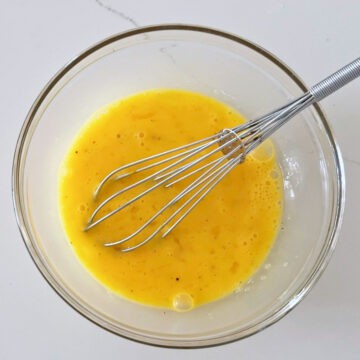
- Whisk the eggs, half-and-half, salt, and pepper in a medium bowl.3 large eggs, 1 tablespoon half-and-half, ⅛ teaspoon sea salt, ⅛ teaspoon black pepper
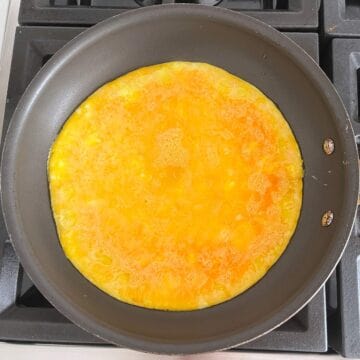
- Melt the butter in a 10-inch lidded nonstick skillet over medium heat. When the butter foams, add the eggs, tilting the skillet to spread them so that they cover the bottom of the skillet. Lower the heat to medium-low.½ tablespoon butter
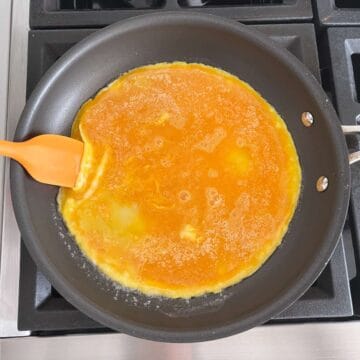
- Let the eggs cook undisturbed until the edges are set, for about a minute, then use a rubber spatula to gently lift the edges and tilt the skillet so that the runny eggs on top slide under the omelette and cook.
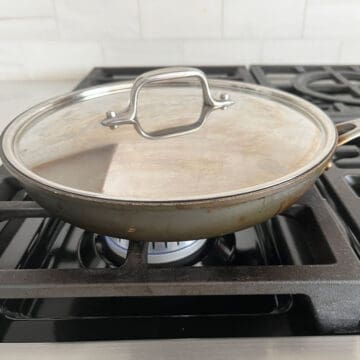
- Lower the heat to low. Cover the skillet with a lid and cook the omelette until the top is nearly set - it should be creamy and glossy but not liquid. This should take 2-3 minutes over low heat.
- If adding fillings, now is the time to add them. You will add them to half of the omelette. See the Notes section below for a few options.
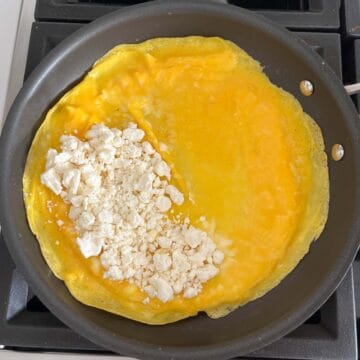
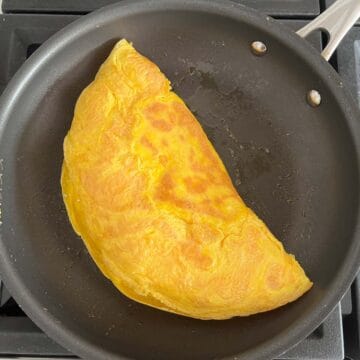
- Fold the omelette in half and transfer it to a serving plate.
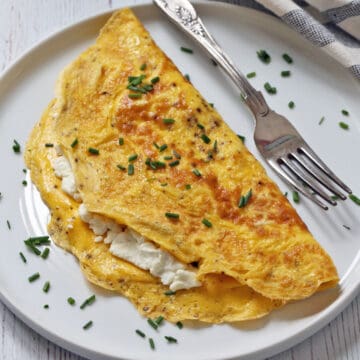
- Top with chopped chives and serve.1 tablespoon chives
Video
Notes
Flavor Variations
Ham and cheese omelette: ¼ cup chopped ham and ¼ cup shredded melty cheese (cheddar, Swiss, gruyere). Remove them to the counter before you start cooking so that they are not refrigerator-cold. Scatter them on half of the omelette right before folding. Mushroom omelette: I like to sauté 8 ounces of sliced mushrooms with 8 ounces of chopped onions in olive oil before making the omelette, seasoning them with salt, pepper, and dried thyme, and adding a splash of water if the pan gets too dry. I cook until the vegetables are browned and all liquid has evaporated. This makes about 2 cups of filling, enough for 4 omelettes. If I have leftovers, I save them and serve them later as a delicious side dish. I also add ¼ cup of shredded cheese before folding the omelette. Goat cheese omelette: The simplest one! Add ¼ cup of goat cheese crumbles to half of the cooked omelette, fold, and top with chives. Plain omelette: Surprisingly delicious! When I keep my omelette plain without any fillings, I prefer to cook it slowly and patiently over low heat, leaving it glossy and creamy, almost like a classic French omelette. This plain version can be topped with sour cream, guacamole, or salsa for extra flavor.Helpful Tips
- Seasonings, especially salt, are guidelines - adjust to taste.
- The most important part of making a great omelette is using a skillet with a truly nonstick surface. For best results, choose a nonstick pan that's in excellent, new, or like-new condition.
- While the classic French omelette is pale and custardy, a browned one has a richer, nuttier flavor, and many people like it that way. It's simply a matter of preference - there's no right or wrong way! If you don't want your omelette to brown, lower the heat to low immediately after adding the eggs to the skillet. The entire process will take several minutes longer, but your omelette should remain creamy and pale.
- To make omelettes for more than one person, cook them one at a time, placing each cooked omelette in a 170°F oven and moving on to the next.
- Have your fillings prepared in advance. Sauté the mushrooms and onions before you start cooking the eggs, grate the cheese, and chop the ham and chives.
- Omelettes are best eaten right after cooking, when they're soft and tender, so storing leftovers isn't ideal. However, if needed, they can be kept in an airtight container in the fridge for up to two days. Reheat them on both sides in a buttered skillet on low heat until heated through.
Nutrition
Serving: 1omelette | Calories: 260kcal | Carbohydrates: 2g | Protein: 17g | Fat: 20g | Saturated Fat: 9g | Sodium: 532mg
Easy Omelette Recipe (Four Variations) https://vortex-health.news/omelette-recipe/%3C/p%3E%3C/div%3E%3Cdiv class="wprm-qr-code-container">