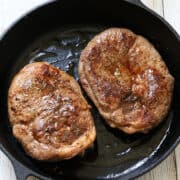
Pan-Fried Lamb Steak
Lamb steak is a great alternative to beef. Minimally seasoned and quickly seared, this delicious steak will be on your plate in 20 minutes.
Servings 2 servings
Calories 617kcal
Ingredients
- 2 lamb steaks 1-inch-thick, 8 ounces each
- 1 teaspoon Diamond Crystal kosher salt or ½ teaspoon of any other salt, including Morton kosher salt
- ¼ teaspoon black pepper
- ¼ teaspoon ground cumin
Instructions
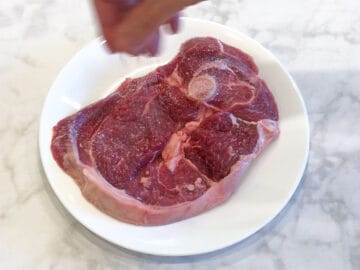
- Season the steaks with kosher salt, black pepper, and ground cumin.2 lamb steaks, 1 teaspoon Diamond Crystal kosher salt, ¼ teaspoon black pepper, ¼ teaspoon ground cumin
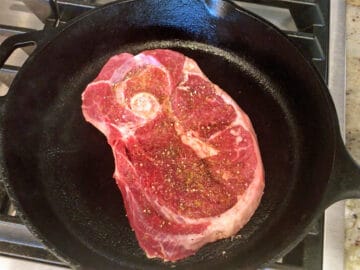
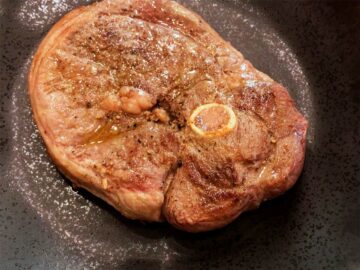
- Heat a well-seasoned, large cast-iron skillet over medium-high heat until smoking. Add the steaks to the hot skillet. Cook until a brown crust forms on the bottom, about 2-3 minutes.
- Flip the steaks and cook them to your desired doneness. I typically cook for 2 more minutes on the second side.
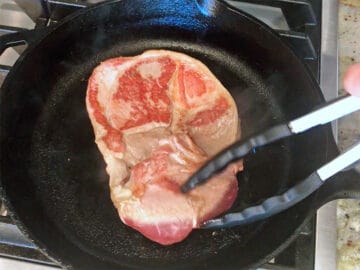
- Finish by cooking the strips of fat on the edges, about 30 seconds for each edge.
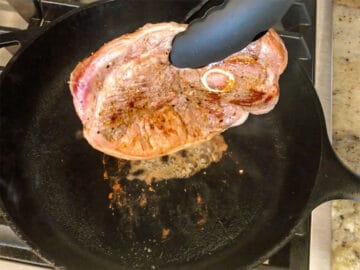
- Transfer the steaks to plates, loosely cover them with foil, and allow them to rest for 5 minutes before serving to allow the juices to redistribute and settle.
Video
Notes
- Seasonings, especially salt, are guidelines. Adjust to taste.
- If you have a smoke alarm near your kitchen, open your kitchen windows and run your range hood fan on high.
- You don't want to overcook these steaks, or you'll end up with tough meat. It's best to aim for medium-rare. To ensure medium-rare doneness and still cook the steaks enough to create a nice crust, cook them right out of the fridge. However, the CDC recommends cooking steaks and roasts to 145℉.
- Tenderness depends not only on cooking technique but also on the animal itself. Steaks cut from the leg will be naturally more tender when the lamb was younger and less physically active. Meat from older or very active animals may remain firmer/tougher even when cooked correctly.
- The steaks sometimes curl because the layer of fat around them contracts and tightens. To prevent this, make shallow cuts in the fat before cooking.
- You can keep the leftovers in an airtight container in the fridge for 3-4 days. You can reheat them in the microwave, covered, at 50% power. But since reheating steak often causes it to become overcooked, I prefer to slice the leftovers and use them cold in a salad.
Nutrition
Serving: 1steak | Calories: 617kcal | Carbohydrates: 0.1g | Protein: 38g | Fat: 50g | Saturated Fat: 22g | Sodium: 400mg
Pan-Fried Lamb Steak https://vortex-health.news/lamb-steak/%3C/p%3E%3C/div%3E%3Cdiv class="wprm-qr-code-container">