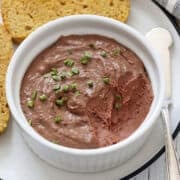
Silky Chicken Liver Pâté
Make a luxurious chicken liver pâté at home! This easy recipe features butter, shallots, cognac, and heavy cream for a rich spread perfect for entertaining.
Servings 4 servings
Calories 357kcal
Ingredients
- 5 tablespoons salted butter room temperature, divided
- 1 pound chicken livers connective tissue removed
- ½ teaspoon sea salt divided
- ¼ cup shallots minced
- ¼ cup cognac or brandy
- ¼ cup heavy cream
- ⅛ teaspoon black pepper
- ⅛ teaspoon ground allspice
- ⅛ teaspoon dried thyme
Instructions
- Melt 1 tablespoon of butter over medium heat in a large, 12-inch skillet. Add the livers in a single layer. Sprinkle them with a pinch of salt. Cook for 2-3 minutes on each side, just until no longer raw - the center should remain pink (see notes below). Transfer the cooked livers to a plate to cool slightly.5 tablespoons salted butter, 1 pound chicken livers, ½ teaspoon sea salt
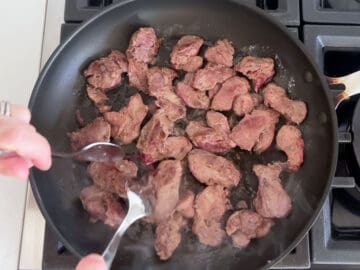
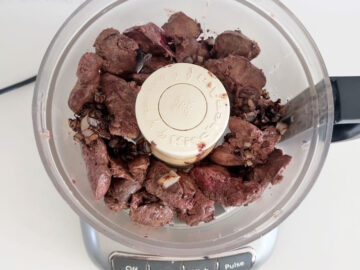
- Add the shallots to the skillet and cook until golden brown, about 3 minutes. Transfer the livers and shallots to the food processor.¼ cup shallots
- Add the cognac to the skillet. Increase the heat to high and cook, deglazing the pan, until the cognac is reduced to 3 tablespoons, about 1 minute.¼ cup cognac
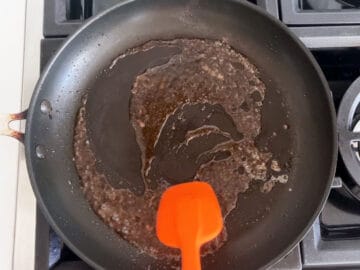
- Turn the heat off and use a rubber spatula to transfer the contents of the skillet to the food processor. Add the heavy cream, the remaining salt, black pepper, allspice, and dried thyme to the food processor bowl. Cover and process on high for about 1 minute, until the liver turns into a smooth paste.¼ cup heavy cream, ⅛ teaspoon black pepper, ⅛ teaspoon ground allspice, ⅛ teaspoon dried thyme
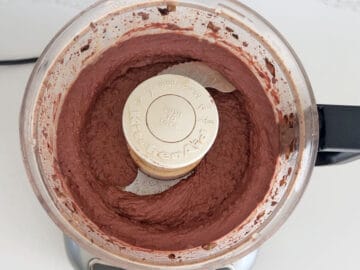
- Add the remaining 4 tablespoons of butter and process on high for 30 seconds, until well-incorporated. Continue to process for 1 more minute until the mixture is light and fluffy.
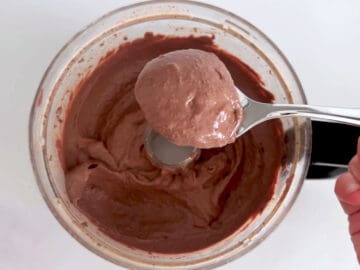
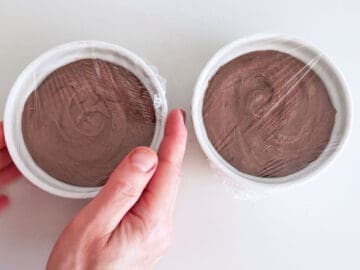
- Divide the mixture evenly among four individual containers (such as small jars or ramekins). Cover and refrigerate for at least 2 hours before serving.
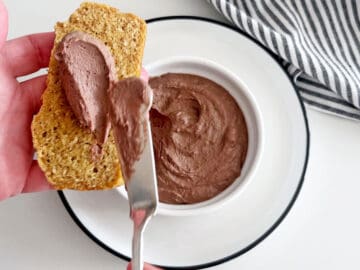
- Serve with toast or (for a low-carb option) almond flour bread.
Video
Notes
- Seasonings, especially salt, are guidelines. Adjust to taste.
- This recipe makes 2 cups. A serving is ½ cup.
- The CDC recommends cooking chicken livers to 165°F, which is well done.
- Chicken livers will splatter and even burst if added to a too-hot pan. So make sure to use medium heat and don't wait too long before adding the livers to the pan.
- Don't try to eat the pâté as soon as it's ready! It's not good when it's still warm. It needs time to rest, at least 2 hours in the fridge. It's best to make it a day ahead and refrigerate it overnight. This helps firm up its texture and ensures that the flavors are melded. If refrigerating overnight, remove the pâté from the fridge 30 minutes before serving.
- You can keep the pâté in an airtight container in the fridge for up to three days. Remove it from the fridge 30 minutes before serving to allow it to soften. I don't recommend freezing it.
Nutrition
Serving: 0.5cup | Calories: 357kcal | Carbohydrates: 4g | Protein: 20g | Fat: 25g | Saturated Fat: 14g | Sodium: 490mg | Fiber: 1g | Sugar: 2g
Silky Chicken Liver Pâté https://vortex-health.news/chicken-liver-mousse/%3C/p%3E%3C/div%3E%3Cdiv class="wprm-qr-code-container">